The numbers are striking. India has 550 million monthly active WhatsApp users — the largest user base of any country, by far. 78% of Indian SMBs already use WhatsApp for business communication — which is closely tied to why CRM adoption fails in Indian companies in the first place. Business messages on WhatsApp achieve a 98% open rate. Businesses that use the WhatsApp Business API report a 45% improvement in response times and 28% higher conversion rates compared to email alone.
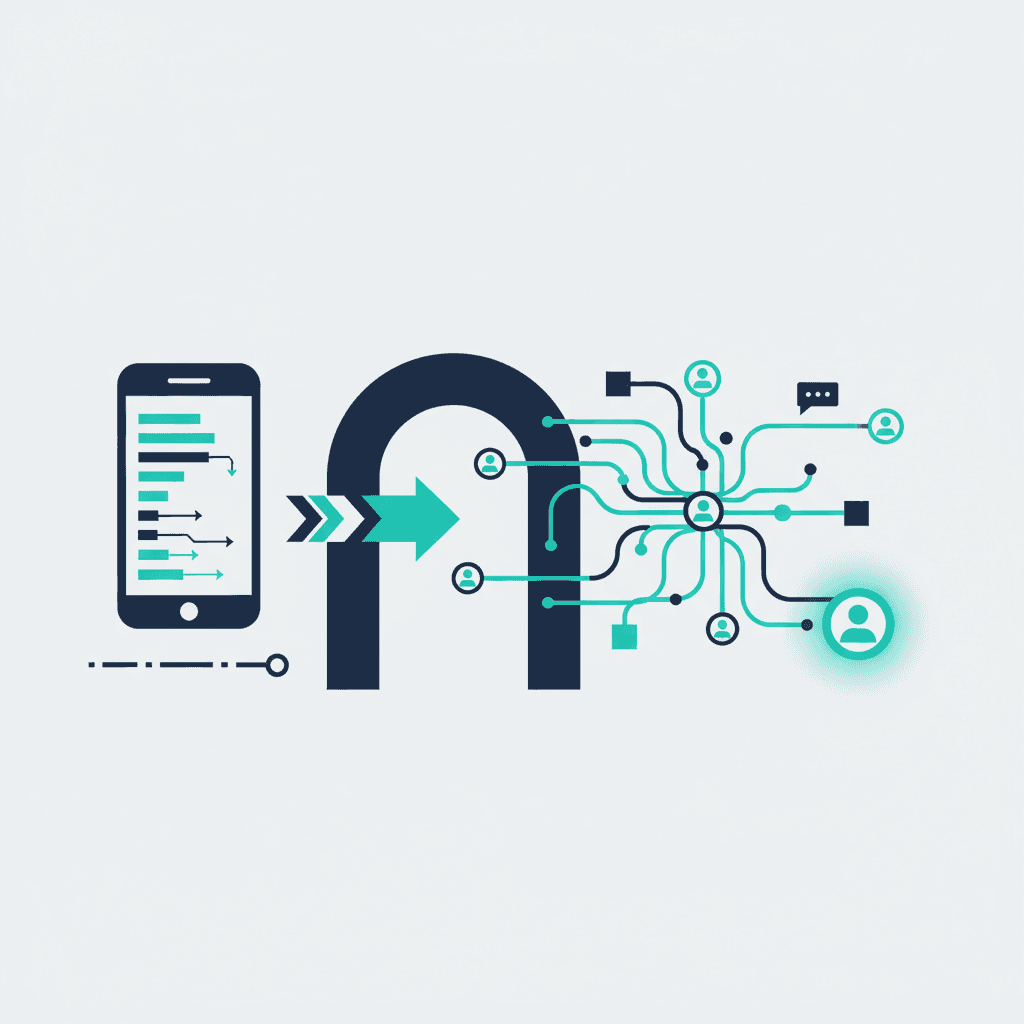
And yet walk through the WhatsApp usage of most Indian businesses and you find the same thing: they're using it as a one-way broadcast channel. Sending quotations. Sharing catalogues. Forwarding payment reminders. Using it as a slightly more convenient replacement for SMS.
The businesses using WhatsApp as an actual sales tool — building pipeline, qualifying leads, running follow-up sequences — are outliers. Here's what they're doing differently.
The pipeline difference
A business using WhatsApp as a broadcast tool fires messages into the void and waits for responses that may or may not come. A business using WhatsApp as a sales tool treats every conversation as a pipeline stage with a defined next action.
The practical difference: when a new lead contacts you on WhatsApp, the pipeline-oriented salesperson doesn't just answer the question and wait. They answer the question, ask one qualifying question, and set a specific next step with a time: "I'll share the full proposal by Thursday — does that work?" This creates a committed timeline, keeps the conversation active, and gives you a natural reason to follow up.
This is not complex. It's the same discipline that makes a good phone salesperson effective. WhatsApp makes it faster and more personal than email. Most businesses don't do it because they've never thought about WhatsApp as a structured sales channel — they've thought of it as messaging.
The follow-up sequence most businesses skip
Industry data shows the average Indian business follows up on a WhatsApp inquiry once. The conversion typically happens on the third to fifth interaction. The gap between those two numbers is where most deals are lost.
A simple WhatsApp follow-up sequence for a service business:
- Day 1: Answer the inquiry, share relevant information, ask one qualifying question
- Day 3: Follow up with a specific piece of value — a case study, an answer to a likely objection, a comparison that helps them decide
- Day 7: "Just checking if you had a chance to look at this — happy to answer any questions"
- Day 14: Final check-in with a low-pressure close: "If the timing isn't right now, no problem. We're here when you're ready."
Four messages over two weeks. Most competitors send one. The businesses running this kind of structured follow-up on WhatsApp consistently outperform those relying on the prospect to re-initiate.
The tool that makes it trackable
The WhatsApp Business App has basic labelling — you can tag contacts as "New Lead," "Proposal Sent," "Follow Up" — which is enough for a salesperson managing 20 to 30 active conversations. Above that volume, you need CRM integration.
Zoho CRM, Leadsquared, and several India-built CRM platforms offer native WhatsApp integration that logs conversations against contact records, triggers automated follow-ups based on conversation status, and gives managers pipeline visibility across the whole team's WhatsApp activity.
The technology is available, affordable (Zoho starts at $9.4 per user per month), and requires no custom development. Most businesses that know it exists haven't implemented it. That gap is an advantage for the ones that do. See How to Use WhatsApp as a CRM for the practical setup.
When you're ready for the API tier, the 2026 platform comparison covers Wati, Interakt and AiSensy with real costs.
Frequently asked questions
What is the difference between WhatsApp Business App and WhatsApp Business API?
The WhatsApp Business App is a free mobile app for small businesses — one device, one user, manual responses. The WhatsApp Business API connects WhatsApp to your CRM or automation platform, allowing multiple agents, automated messages, and broadcast to opted-in contacts. The API requires a paid WhatsApp Business Solution Provider and is suited for businesses handling 50+ conversations per day.
Can WhatsApp replace email for Indian B2B businesses?
For initial outreach and quick follow-up: yes, WhatsApp outperforms email significantly in India (98% open rate vs. 22% for email). For formal proposals, contracts, and documentation that needs a paper trail: email remains essential. The most effective approach uses WhatsApp for relationship communication and email for formal records.
Is it legal to use WhatsApp for B2B sales outreach in India?
For opted-in contacts who've shared their number with your business: yes. For cold outreach to purchased contact lists: no — this violates WhatsApp's terms of service and India's privacy regulations. The distinction matters because accounts that generate spam complaints get banned. Build your WhatsApp contact list the same way you'd build an email list: through genuine opt-in.
How do I track WhatsApp leads without a full CRM?
At minimum, maintain a WhatsApp contacts spreadsheet with columns for: name, business, date of first contact, last message date, and status (prospect/qualified/proposal sent/closed). Review it weekly. This is not scalable, but it's better than losing track of conversations in the chat archive. When the spreadsheet becomes unmanageable, that's the signal to implement a CRM with WhatsApp integration.
Yash
Founder & Principal Consultant, Ynexgen
Yash leads Ynexgen, helping small and mid-sized businesses turn technology into a stronger foundation for growth — 7+ years across Salesforce CRM, websites, and AI adoption.