Every business reaches a point where spreadsheets stop working. Leads fall through cracks, follow-ups get missed, and no one knows what happened to that $50,000 deal from last quarter. That's when someone on the team says, "We need a CRM." And then someone else says, "What about Salesforce?"
Then the conversation gets quiet.
Salesforce has a reputation for being expensive, complex, and something only enterprises with full-time administrators can afford. Some of that reputation is earned. But a lot of it comes from people who bought the wrong tier, didn't plan the rollout, and blamed the tool. Here's what you actually need to know before you make this decision.
What You'll Pay
The entry point is $25 per user per month — the Starter Suite, which covers basic CRM, contacts, leads, and email tools. For a five-person sales team, that's $1,500 a year. That sounds manageable. (If your bill has crept well beyond that, you may be paying for Salesforce features you don't use — and a fractional admin can right-size it.)
The problem is the 10-user cap. The Starter Suite won't let you add an eleventh person. When you hit that ceiling, you move to the Pro Suite at $100 per user per month. A 15-person team suddenly costs $18,000 a year in licenses alone.
Add implementation — where the real costs hide — and year one looks like this:
- Small team (under 10 people), minimal customisation: $35,000–$60,000 total
- Mid-size team (15–30 people), CRM plus some automation: $80,000–$150,000 total
- Larger rollout with integrations, custom workflows, AI features: $150,000–$500,000+
Compare that to Zoho CRM at $14 per user or Pipedrive at $15. Salesforce costs 60–70% more before you factor in implementation.
So why does anyone buy it?
What You Get for the Premium
Salesforce's moat isn't features — it's ecosystem. Over 5,000 apps integrate natively with Salesforce. If you use any enterprise software in finance, HR, marketing, or operations, there's a Salesforce connector for it. Swapping to Salesforce means you stop duct-taping tools together.
The second thing you're buying is AI. Agentforce — Salesforce's AI automation layer — can handle tier-one customer service, route leads, prioritise deals, and flag at-risk accounts without a human touching anything. A mid-market B2B firm deployed Agentforce for customer support and saw a 35% case deflection rate — a third of customer inquiries resolved without a single support agent. They hit positive ROI in two weeks.
The third thing is compliance. If you're in healthcare, finance, or any regulated space, Salesforce is built for it. Alternatives are not.
The Real ROI Story
Forrester studied five organisations with over $500 million in annual revenue that used Salesforce Marketing Cloud. Three-year results: 299% average ROI. More than $5 million in incremental revenue. Site conversion rates up 60%. Average order value up 35%.
That's enterprise numbers. What about smaller businesses?
The math is simpler than it looks. If your sales team closes $2 million a year and better pipeline management increases win rate by 10%, that's $200,000 in additional revenue — against a $60,000 annual Salesforce cost. You're cash-flow positive in month seven.
The catch: 43% of companies that implement Salesforce never see that ROI. The reason, consistently, is user adoption. Salesforce is only as useful as the data in it. If your sales team doesn't log calls, update deals, or use the mobile app, you've bought an expensive contact list.
Is It Right for You?
Buy Salesforce if you have more than 10 people managing customer relationships, your revenue is above $2 million a year, and you have someone who will own the tool — a dedicated admin, or a senior sales leader who takes it seriously. Expect 12–18 months to break even on the full investment.
Skip Salesforce if you're under five people, your revenue is below $500,000, or you're testing CRM for the first time. Start with HubSpot's free tier or Pipedrive. Build the habit of using a CRM before you buy the expensive version.
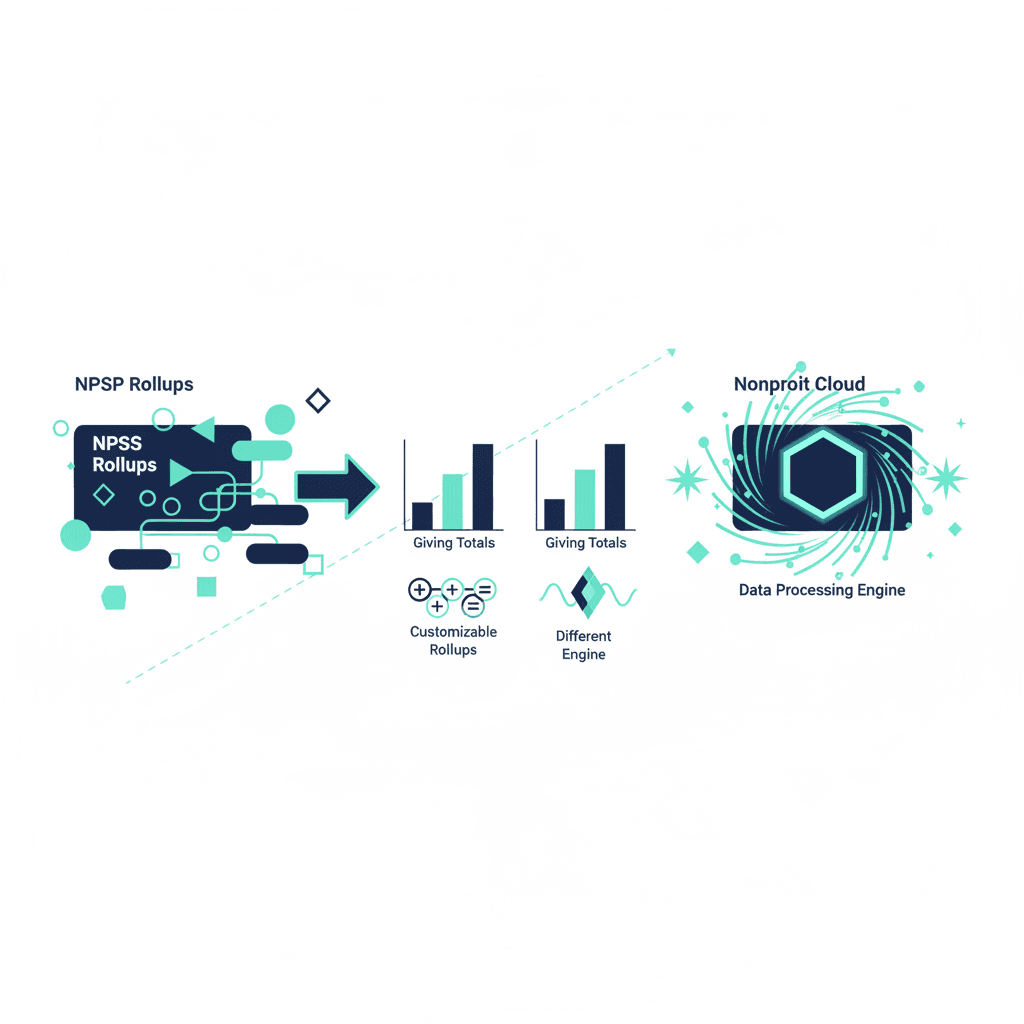
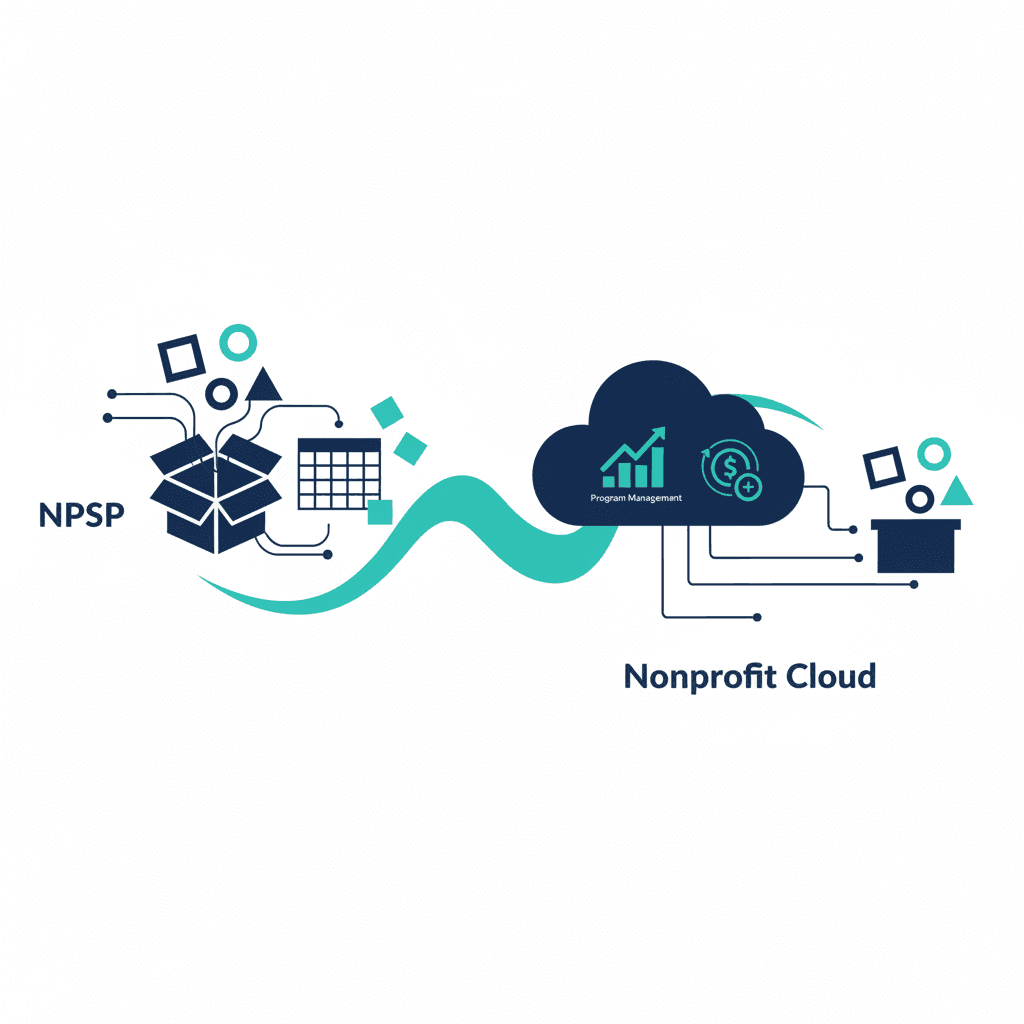
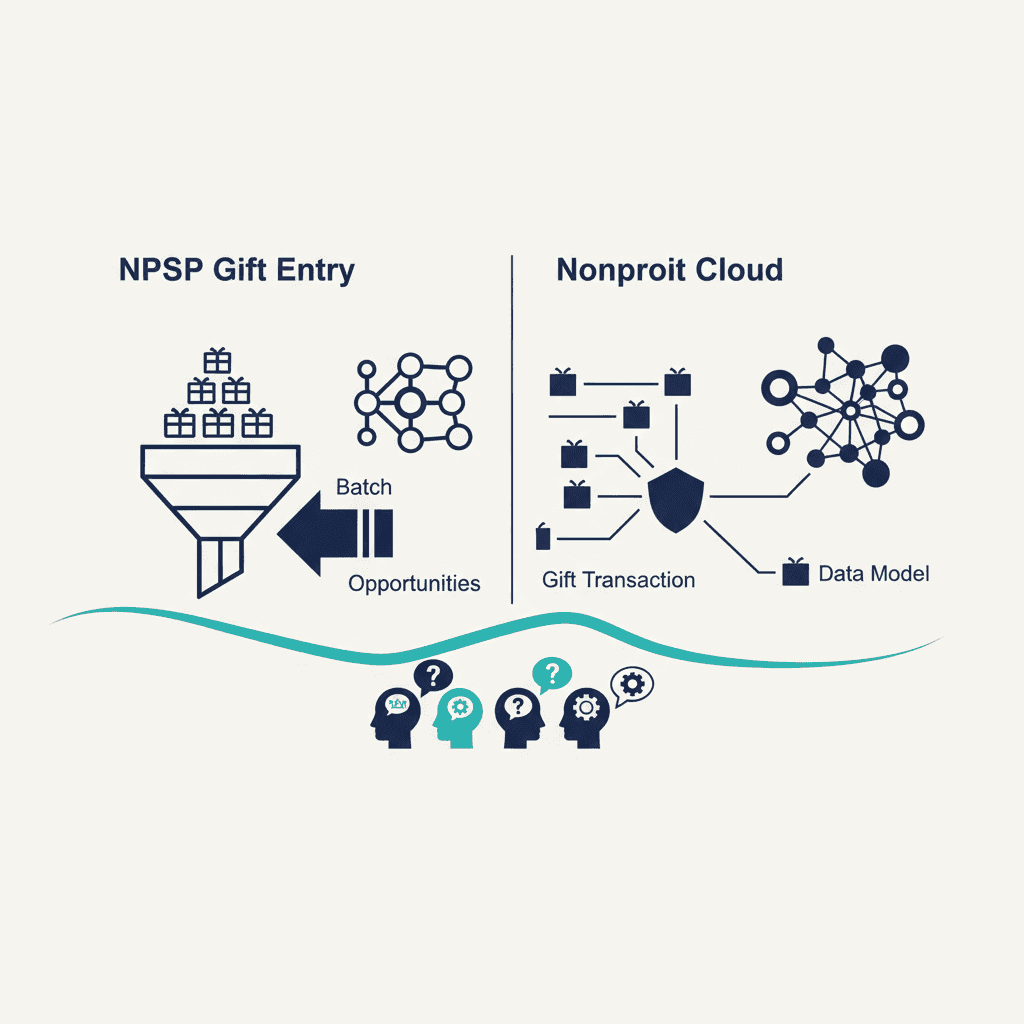
The most expensive version of Salesforce is the one you pay for and no one uses. If you're past the cost question and into planning, see How Long Does Salesforce Implementation Take?. If you're specifically weighing an NPSP-to-Nonprofit-Cloud move, see our migration guide.
Frequently asked questions
What is the cheapest Salesforce plan?
The Starter Suite at $25 per user per month is the entry point, but it caps at 10 users. Once you exceed that, you move to the Pro Suite at $100 per user per month.
How long does it take to see ROI from Salesforce?
Most SMBs break even between month 12 and 18 if adoption is strong. Companies with poor user adoption — the top failure mode — often never see positive ROI.
Is Salesforce worth it for a 5-person team?
Usually not at this size. Under 10 people, a simpler CRM like HubSpot or Zoho delivers similar results at a fraction of the cost. Consider Salesforce once you hit 10+ users with complex pipeline needs.
What is the biggest hidden cost in Salesforce?
Implementation. Licensing gets all the attention, but a proper Salesforce rollout costs $10,000–$100,000+ on top of annual license fees. Skipping proper implementation is the main reason businesses overpay and underuse it.
Yash
Founder & Principal Consultant, Ynexgen
Yash leads Ynexgen, helping small and mid-sized businesses turn technology into a stronger foundation for growth — 7+ years across Salesforce CRM, websites, and AI adoption.