Every few weeks, a new AI tool goes viral. Founders screenshot their productivity dashboards. LinkedIn fills with posts about how this tool saved them 30 hours last week. The FOMO is real and it's engineered. (Before you subscribe to anything, see which AI tools are worth paying for.)
So businesses subscribe. Sometimes to one tool, sometimes to six. They set them up over a weekend. And then, quietly, they go back to their existing workflows because the tool wasn't quite what the demo showed, or it requires more prompt engineering than expected, or it's just easier to do it the old way until there's time to figure it out properly.
There is never time. The tools sit unused. The subscriptions quietly renew.
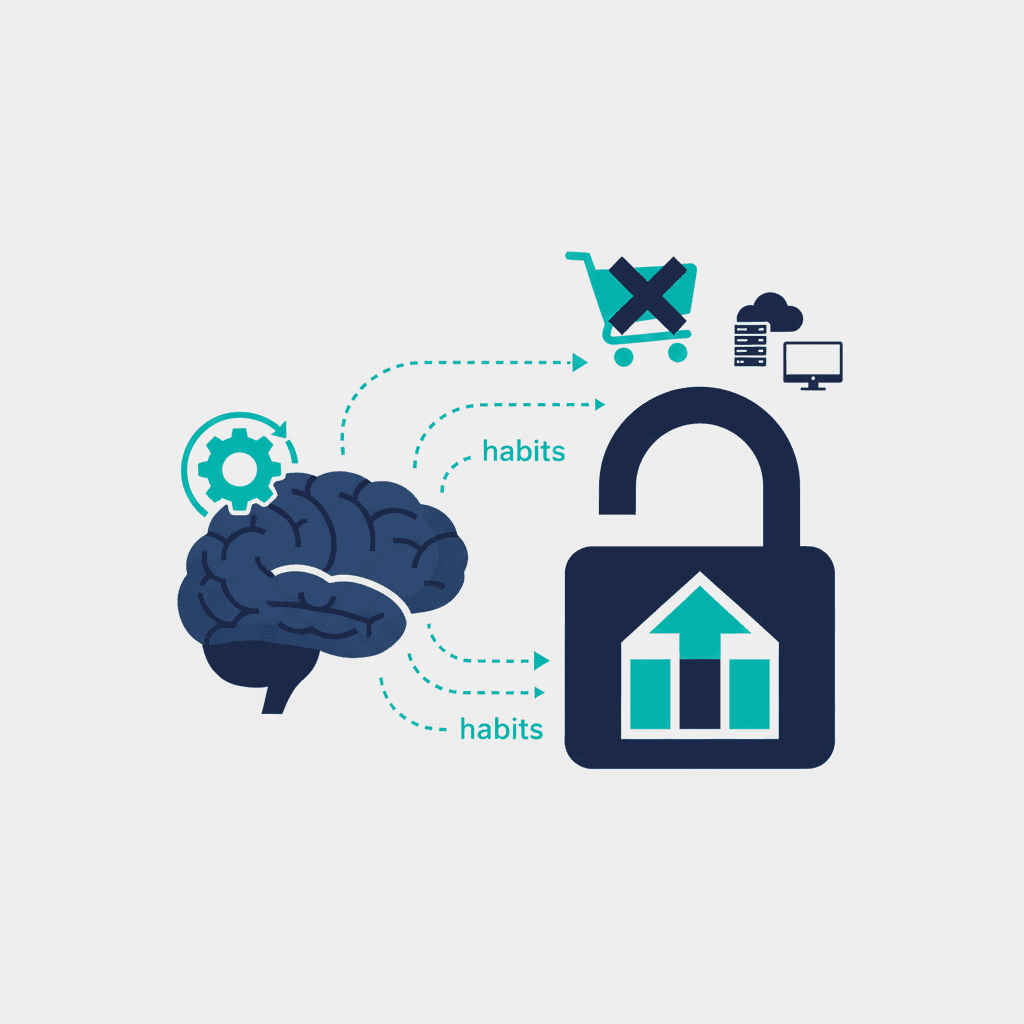
This is not an AI problem. It's a habits problem dressed up as a tools problem.
The habit gap
Think about the last tool your business adopted that actually changed how you work. It probably wasn't the most feature-rich option. It was the one that solved a specific, daily friction point so immediately that the habit formed without effort.
AI adoption breaks down exactly where most tools break down: when the use case isn't concrete enough. "Use AI to be more productive" is not a use case. "Use AI to write the first draft of every client proposal" is a use case. One of those creates a habit; one creates a subscription that expires in three months.
The one-task rule
Before subscribing to anything, identify one specific task — one — that you do more than three times a week, takes more than 20 minutes each time, and produces output that follows a reasonably consistent pattern.
That task is your habit anchor. Start there. Use AI for that task, only that task, every single time you do it. Do it for four weeks.
By week four, one of two things has happened. Either the habit has formed and you're genuinely faster, in which case you've earned the right to add the next use case. Or you've discovered the tool doesn't actually work for this task as well as you thought, in which case you saved yourself from building an entire strategy on a weak foundation.
Why buying more tools first makes it worse
Six AI subscriptions don't create six times the productivity. They create six times the context-switching and six times the friction of deciding which tool to open for which task.
The businesses that have genuinely transformed their workflows with AI — not the ones posting screenshots, but the ones you'll meet in two years who haven't talked about it publicly because they're too busy winning — started with one tool, made it unavoidable, and expanded slowly.
One tool. One task. Four weeks. Then decide what's next. See 5 AI Tools That Save Small Businesses 10 Hours a Week for where to start looking.
Frequently asked questions
How long does it take to build an AI habit?
Research on habit formation suggests 21 to 66 days for a new behaviour to become automatic. For AI tools, the practical threshold is simpler: if you're not reaching for the tool instinctively within four weeks of daily use, either the tool isn't solving a real daily problem or your use case isn't strong enough yet.
Which AI tool should I start with to build the habit?
The one that addresses the task you do most often that feels like grinding. For most business owners that's email — writing replies, following up, summarising threads. Start with an AI that sits in your inbox. Once that habit is solid, add the next tool.
Is there a risk of becoming too dependent on AI tools?
Less than you'd think for most business tasks. The risk is the opposite — not using available tools that would free up time for higher-value work. Dependency becomes a problem only when AI is used for judgment calls that require human context, not for drafting emails or summarising documents.
How do I convince my team to use AI tools if they're resistant?
Don't start with a team mandate. Start with one person who's enthusiastic, demonstrate a specific time saving in the first week, and let the results do the selling. Resistance usually dissolves when colleagues see someone finishing the same work in half the time.
Yash
Founder & Principal Consultant, Ynexgen
Yash leads Ynexgen, helping small and mid-sized businesses turn technology into a stronger foundation for growth — 7+ years across Salesforce CRM, websites, and AI adoption.