The brief almost always starts the same way. Home, About, Services — with a sub-page for each service — Team, Case Studies, Blog, FAQ, Partners, and Contact. Twelve pages minimum. Maybe fifteen.
Then the project starts. The case studies never get written. The team page uses photos from 2019. The blog gets three posts and stops. The partner page has two logos on it. The FAQ has four questions.
Six months later: a twelve-page website where visitors arrive at the homepage, look around, don't find what they're looking for quickly enough, and leave.
What most business websites actually need
Four pages. Done well, they outperform twelve pages done averagely.
Homepage: One clear sentence about what you do and who it's for. Three to five sentences about why you're different or better. One concrete call to action. Social proof — a quote, a logo, a result. That's it.
Services: What you offer, written from the client's perspective (what problem it solves, not what it is technically), and how to get started. If you have three services, three sections on one page. Not three sub-pages.
About: Who the people are, briefly, with real photographs. Why the business exists, in one paragraph that doesn't use the word "passion." One or two client results or case studies in plain language.
Contact: How to reach you. Phone, email, WhatsApp button if you're in India or similar markets. A short form — name, email, one open question. Working.
That's the minimum viable website that a professional services business needs to establish credibility and capture enquiries. Everything else is optional.
Why more pages usually hurt more than they help
A website with twelve pages that are all moderately good creates a navigation problem — and a confusing site is one of the signs your website is costing you customers. Visitors have to decide where to go. They make wrong turns. They find the FAQ when they wanted the Services page. They leave.
A website with four excellent pages has one path. Visitors arrive, read, and either contact you or don't. There's no confusion about where to go next because there's only one next step.
The businesses most tempted to over-build are the ones most anxious about being taken seriously. More pages feels more substantial. It feels like more is being offered, more value communicated, more professionalism demonstrated.
But visitors don't stay on your website to appreciate its architecture. They stay to answer one question: can this business help me? The faster you answer that question — with clarity, proof, and a clear action — the more of them contact you.
Build four pages that answer the question. Then add the fifth when you know what it needs to say. See How Long Does It Take to Build a Website? for a realistic timeline on getting there.
Frequently asked questions
What are the minimum pages a service business website needs?
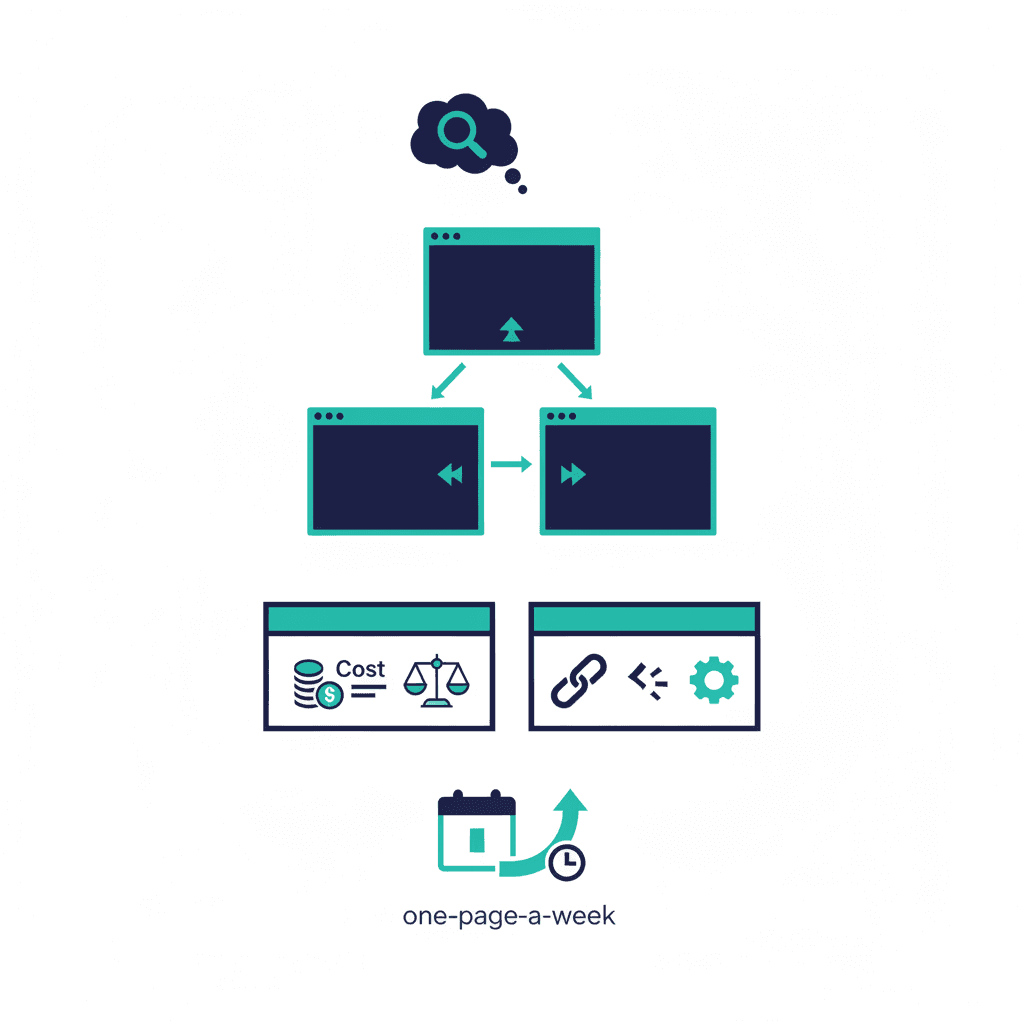
Four: homepage (what you do and who it's for), services (what you offer and what it costs or how to get a quote), about (who you are and why you're credible), and contact (how to reach you). Everything else is optional and should be added only when traffic and content justify it.
Doesn't a larger website perform better for SEO?
More pages can help SEO if each page is well-written and targets a specific search intent. But thin pages, duplicated content, and pages that exist only to make the site look substantial hurt more than they help. Five strong pages outrank 20 weak ones. Build for quality before building for volume.
When should I add a blog to my business website?
When you have the time and commitment to publish at least one post per month consistently. A blog with six posts from three years ago signals neglect. A blog that's updated monthly builds both SEO value and credibility. Add it when you can maintain it, not when you're building the site.
How do I know if my website is too large and unfocused?
Look at your analytics (or ask your developer). If more than 60% of your traffic goes to the homepage and the pages after it get minimal visits, most of your website is invisible. Visitors are arriving, not finding what they need quickly, and leaving. Simplification almost always improves conversion.
Yash
Founder & Principal Consultant, Ynexgen
Yash leads Ynexgen, helping small and mid-sized businesses turn technology into a stronger foundation for growth — 7+ years across Salesforce CRM, websites, and AI adoption.