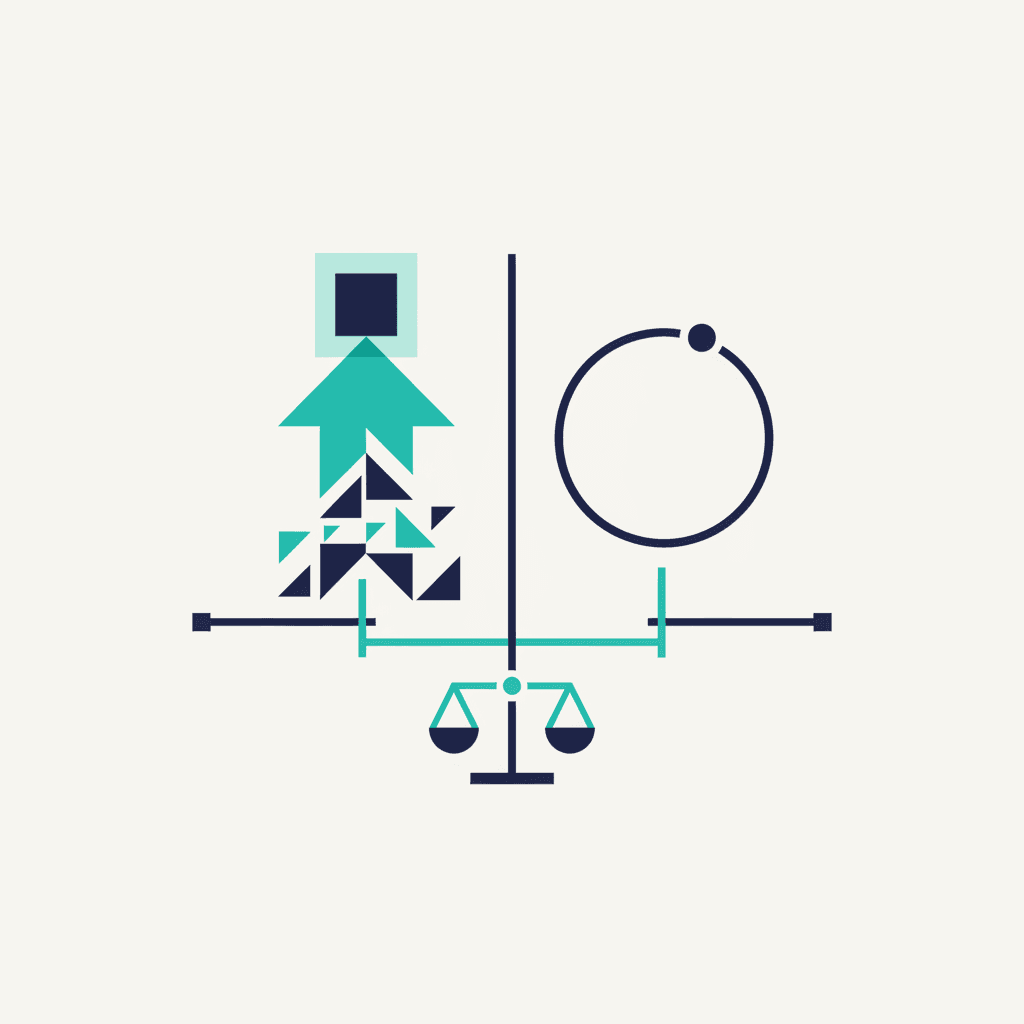
The decision comes down to one question: is the work a project or a function? Projects have an end state — once the CRM is implemented, the website launched, the process fixed, the work is done. Functions recur indefinitely — sales calls happen every week forever. Consultants suit projects; employees suit functions. Most bad hires in both directions come from ignoring this distinction. (Not sure what a consultant actually does day to day? See what does a business consultant actually do.)
When a consultant is the right call
The work has a finish line. Implementing a system, fixing a broken process, making a build-vs-buy decision — once done, done. Hiring a permanent employee for finite work means paying a salary long after the work ended, or a layoff.
You need senior expertise you can't afford full-time. A person with fifteen CRM implementations behind them costs serious money as an employee — likely more than a small business can justify. The same person on a six-week engagement is affordable precisely because you're only buying the weeks you need.
Speed matters more than institutional knowledge. A specialist who has done this exact project many times starts productive on day one. An employee — even a good one — learns on your time and your budget.
When an employee is the right call
The work recurs weekly, indefinitely. Ongoing sales, ongoing support, ongoing content. Paying consultant rates for permanent work is the most expensive possible way to staff a function.
Institutional knowledge is the value. Roles where knowing your customers, history, and internal quirks compounds over years favour someone who stays.
The work is genuinely full-time. If there are forty real hours a week of it, the per-hour economics flip decisively toward an employee.
The honest cost comparison
A mid-level full-time hire costs roughly 1.25–1.4× their salary once you add taxes, benefits, equipment, and management overhead — and that cost runs whether or not there's project work that month. A fixed-scope consulting engagement costs more per hour and nothing per month afterward. Run the numbers on a 12-month horizon, not an hourly-rate comparison — the hourly rate is the least informative number in this decision. For what consulting actually costs at small-business scale, see How Much Does AI Consulting Cost?.
The hybrid most growing businesses actually use
Consultant first, employee second: bring in a specialist to design and implement the system, insist on documentation and training as deliverables (see How We Work for what that handoff should look like), then hire a junior person to run the now-well-defined function. You get senior design without a senior salary, and the new hire inherits a documented system instead of chaos.
The honest recommendation
Write down whether the work ends. If it ends, scope it as a project and engage a consultant with a fixed price and a defined finish. If it doesn't end, hire — and if you're not sure, a short consulting engagement to define the function is usually cheaper than a mis-hire in either direction.
Frequently asked questions
Isn't a consultant always more expensive than an employee?
Per hour, almost always. Per outcome, often not — a consultant on a 6-week fixed-scope project costs a fraction of an employee's annual fully-loaded cost, and there's no ongoing salary after the project ends. The comparison only favours an employee when the work is genuinely permanent.
What's the biggest mistake businesses make with this decision?
Hiring a full-time employee for what is actually a one-time project (a CRM implementation, a website build) — then either inventing work to justify the role afterward, or facing a layoff. Match the employment type to the shape of the work, not to habit.
Can I start with a consultant and hire later?
Yes, and it's often the right sequence: use a consultant to set up the system and document it, then hire a (cheaper, less senior) employee to run the now-well-defined function. The consultant's documentation becomes the new hire's onboarding.
Yash
Founder & Principal Consultant, Ynexgen
Yash leads Ynexgen, helping small and mid-sized businesses turn technology into a stronger foundation for growth — 7+ years across Salesforce CRM, websites, and AI adoption.