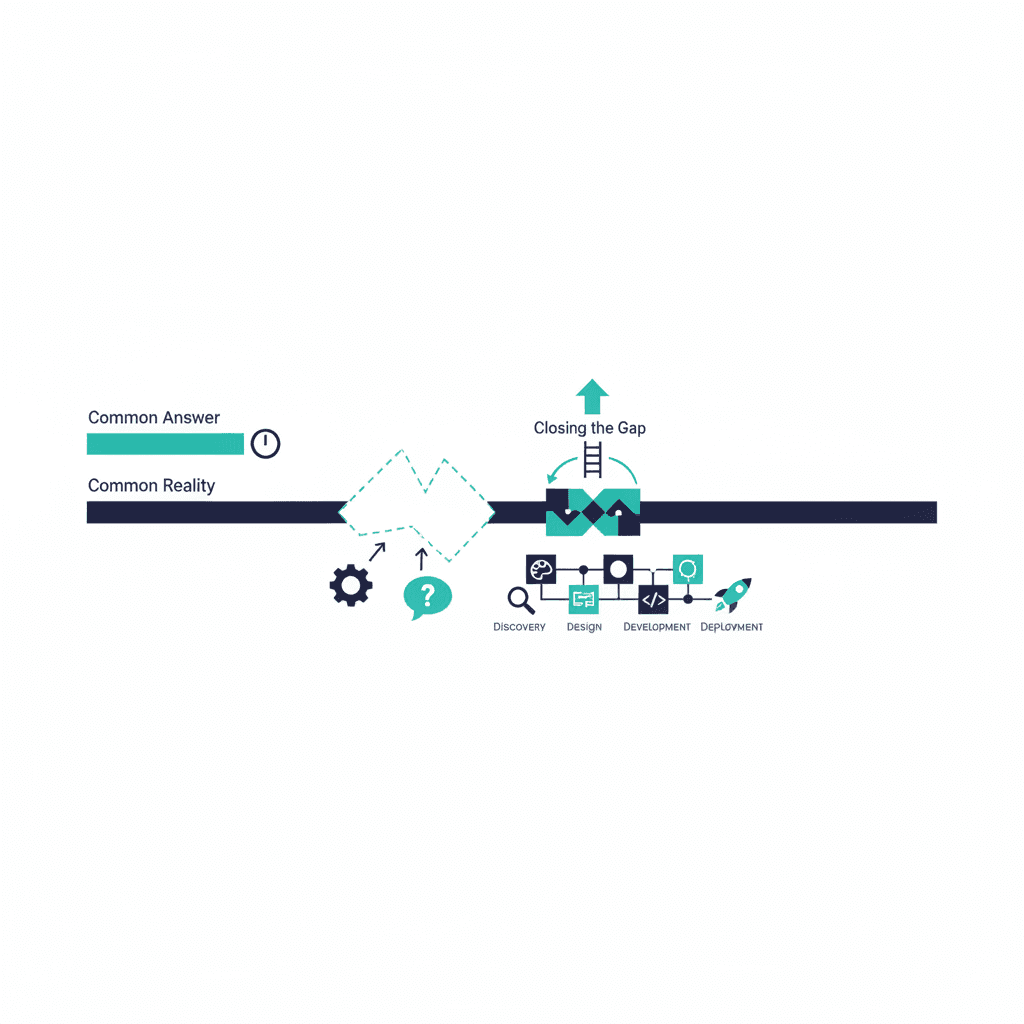
"It'll take about six weeks" is what almost everyone says when a website project starts. It's also almost never what happens.
The average small business website project takes 3 to 4 months from first conversation to launch — often because the brief is bigger than it needs to be; see the website you need is smaller than you think. For custom builds with multiple stakeholders, 5 to 6 months is common. The six-week timeline exists — it's just the exception, not the rule, and it requires specific conditions that most businesses don't have in place.
Why websites take longer than quoted
The answer, almost always, is content.
Design can't be finalised without copy. Copy can't be finalised without knowing what services are being promoted, at what price, to which audience. Images can't be selected until design direction is confirmed. SEO recommendations can't be implemented until the page structure is defined.
Most clients underestimate how long their side of the work takes. When a project kicks off, the business owner is typically in the middle of running a business. They don't have the copy. The product photos need to be taken. The team bio headshots are still from 2019. The "about us" draft is a third of what it should be.
None of this is unusual. It's the default state of nearly every website project. The question is whether you account for it.
Realistic timelines by project type
Template-based site (5–8 pages): 3 to 5 weeks if content is ready upfront. 6 to 10 weeks if content is gathered during the project. Applies to most local service businesses, consultants, and simple portfolio sites. Costs $3,000 to $8,000.
Custom design, small site (5–12 pages): 8 to 14 weeks. Includes original design work, custom development, and at least one round of refinements. Applies to professional services firms and B2B businesses. Costs $8,000 to $20,000.
Complex site with integrations (12+ pages): 14 to 24 weeks. E-commerce, booking systems, CRM integration, multilingual setups, or content-heavy builds. Costs $20,000 to $60,000+.
The content preparation shortcut
The single most effective way to hit your launch date is to prepare content before the design phase begins. This means having every page's copy written — or at least outlined — before wireframes are presented.
Hire a copywriter as a separate step, before briefing the design agency. This feels like it adds time; in practice it almost always saves time, because designers work faster with real content than with placeholder text.
When to launch anyway
There's a point of diminishing returns in the perfectionism cycle. If your business currently has no website, or has one from five years ago that's actively damaging your reputation, a fast launch with good bones beats a perfect launch that takes two more months.
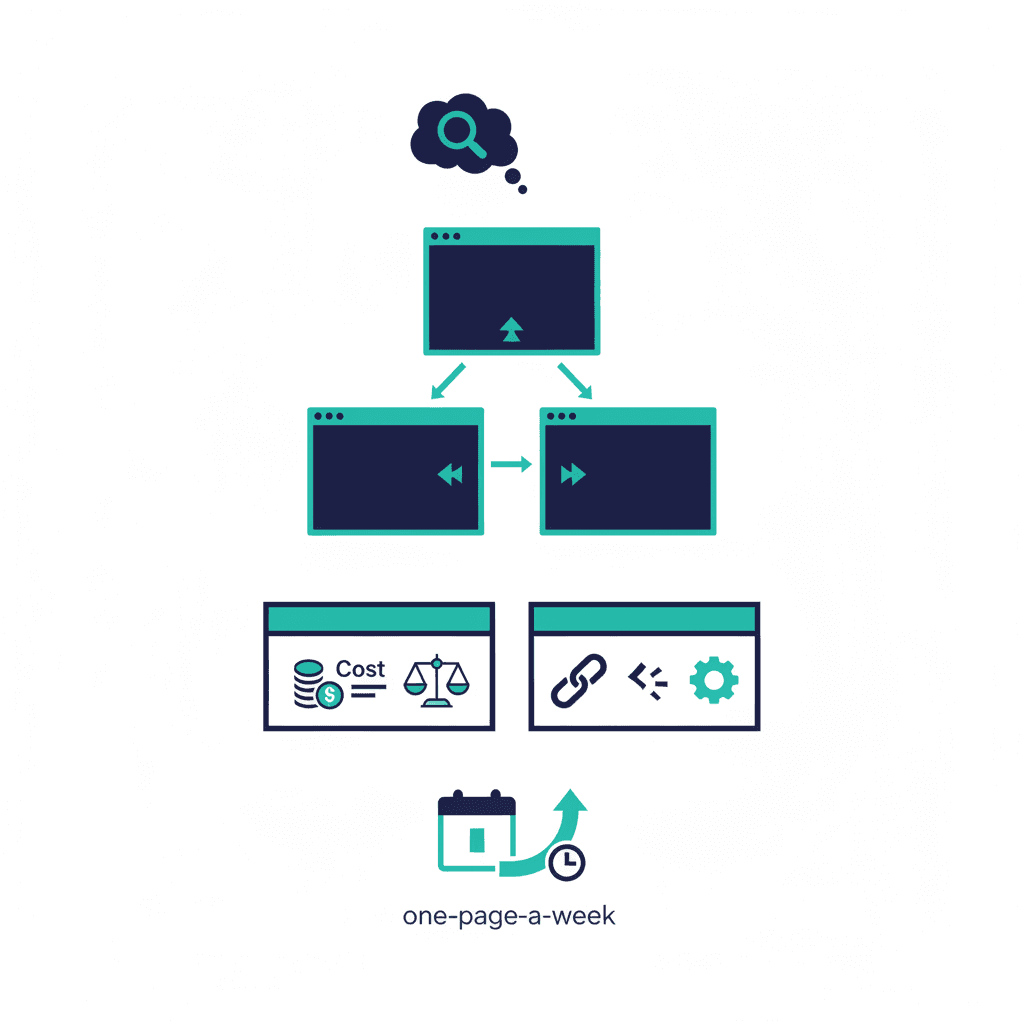
Identify the minimum viable set of pages: homepage, services, contact. Launch those. Add the portfolio, the team bios, the blog, and the case studies in the weeks after. An imperfect live site beats a perfect draft every time. If you're still deciding between a website builder and a custom build, see our full cost comparison.
Frequently asked questions
What is the fastest realistic timeline for a professional website?
A template-based small business site can launch in 2 to 3 weeks if the client provides content quickly. A fully custom design typically takes 6 to 10 weeks minimum. Rush projects with dedicated developer time can compress timelines but cost significantly more.
What causes most website projects to run over time?
Content. Most delays happen because the client hasn't prepared copy, images, or key information before the design phase starts. A website project where all content is provided upfront runs dramatically faster than one where it's gathered piece by piece.
Should I launch a partial website or wait until it's complete?
Launch partial if you have any business to lose from having no website. A clean homepage with a contact form is better than a coming soon page. Add pages and content progressively after launch.
How many revision rounds are standard in a website project?
Professionally managed projects typically include 2 to 3 rounds of revisions per page. Unlimited revision projects almost always take twice as long, because without a defined process, feedback cycles become open-ended.
Yash
Founder & Principal Consultant, Ynexgen
Yash leads Ynexgen, helping small and mid-sized businesses turn technology into a stronger foundation for growth — 7+ years across Salesforce CRM, websites, and AI adoption.