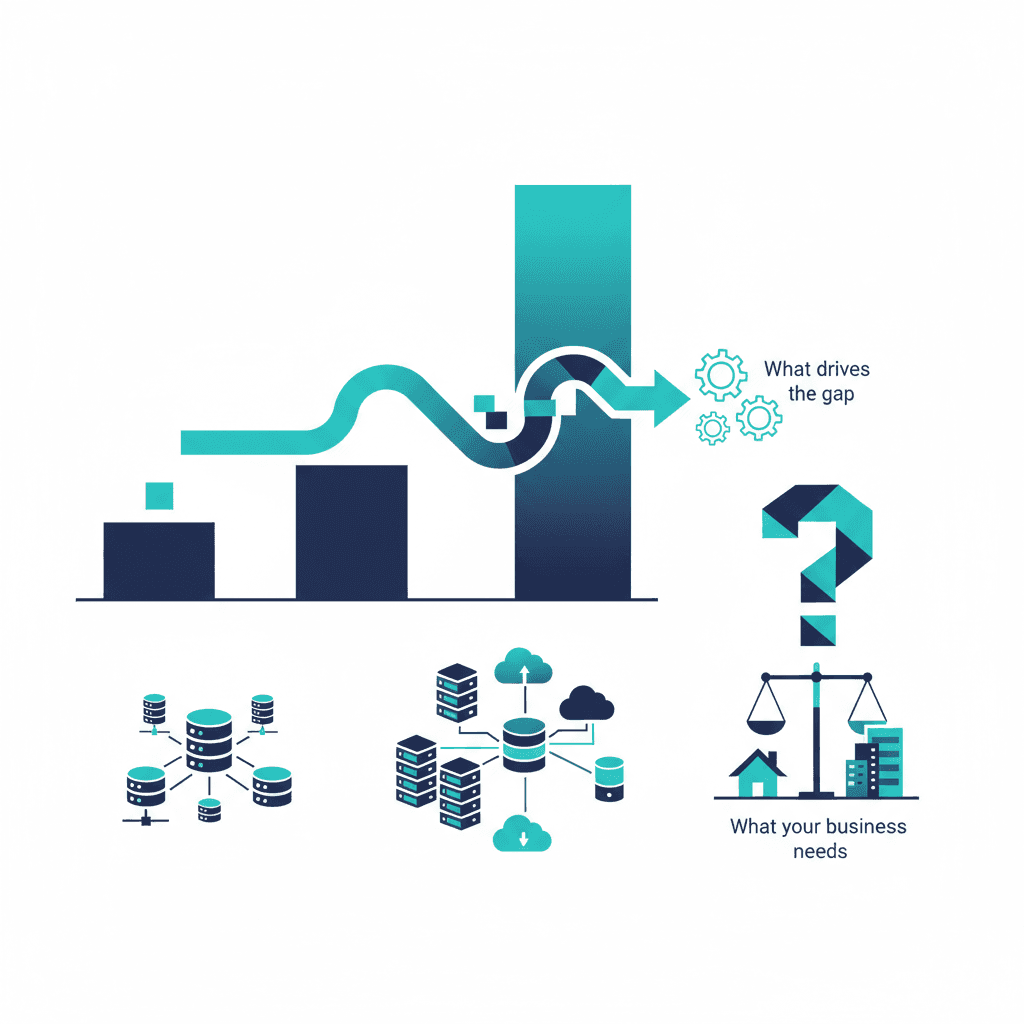
A professional website for a small business costs somewhere between $500 and $50,000. That's not a mistake. Both numbers are real. (Pricing this from India? See website development cost in India for local numbers.) The gap exists because "website" means completely different things depending on what you're building and who you're building it for.
Most people asking about website costs are actually asking a different question: how much should I spend to get something that works? That's the question worth answering. (Once it's built, getting search engines to actually find it quickly is its own question — see how search engines discover new content.)
What the Market Charges
Here's where the money goes, broken down by who builds it:
DIY (WordPress, Webflow, Squarespace): $500–$2,000 upfront, $200–$500 per year after. You're trading money for time — expect 20–40 hours to build something decent, then ongoing maintenance on top.
Freelancer: $2,000–$8,000 for a small business site. Wide range because freelancers vary wildly. A $2,000 freelancer and an $8,000 freelancer may produce sites with identical visual quality but completely different conversion performance.
Small agency: $5,000–$15,000. Two-thirds of the market sits in this range. You get a team — designer, developer, sometimes a strategist — a defined process, and someone to call when something breaks.
Mid-market agency: $15,000–$50,000. For businesses where the website is a primary revenue driver: complex e-commerce, high-traffic lead generation, deep integrations.
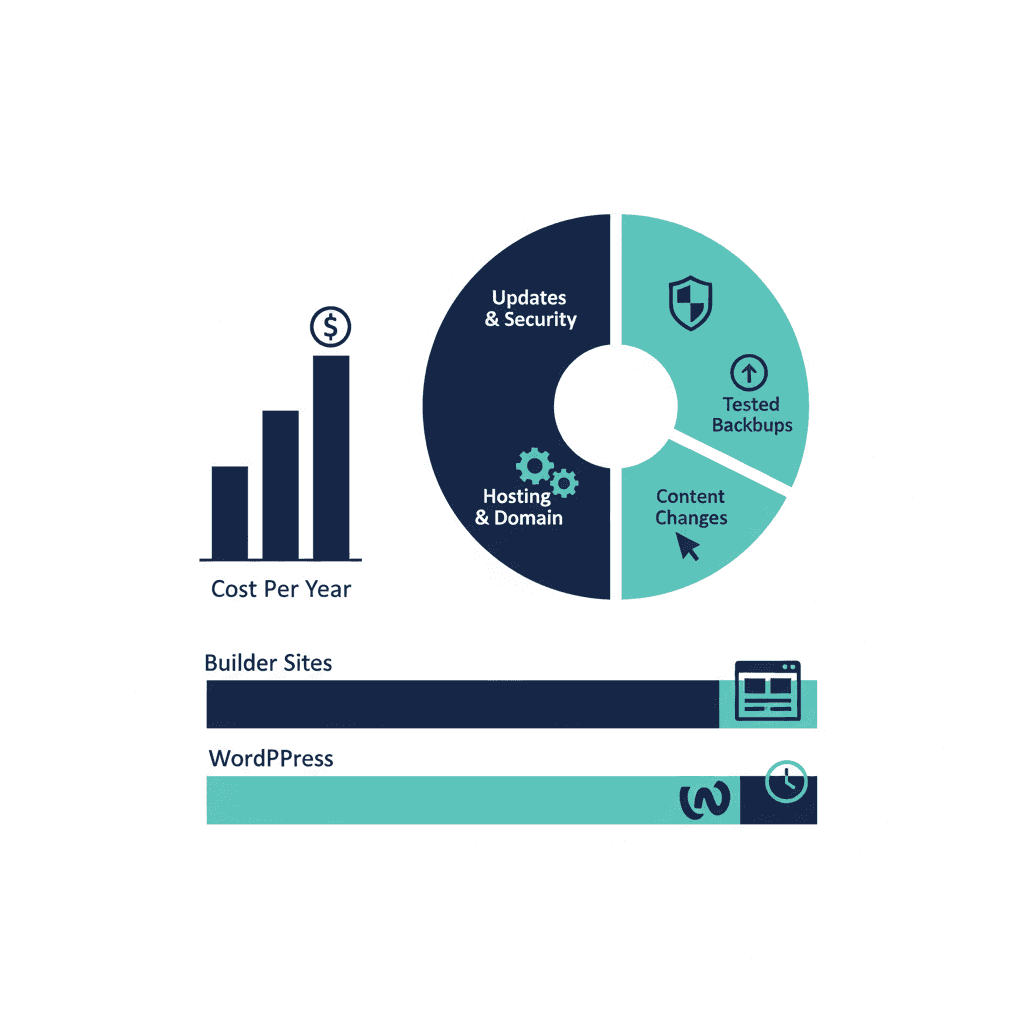
Ongoing costs everyone underestimates: $1,100–$5,000 per year for hosting, security certificates, backups, plugin updates, and basic content changes. Budget for this or the site degrades.
Why Two Sites at the Same Price Perform Differently
The biggest misconception about website pricing is that you're paying for aesthetics. You're not. A well-priced website earns its cost through conversion — turning visitors into leads, calls, purchases, or enquiries.
Page speed is a conversion factor. A site that loads in two seconds versus five seconds has a 40% lower bounce rate. That's not a design choice — it's infrastructure and code quality.
Call-to-action placement is a conversion factor. A button in the wrong place, with the wrong copy, loses 20–40% of the people who were ready to buy.
Mobile responsiveness is a conversion factor. Over 60% of site visits happen on phones. A site that looks broken on mobile loses that traffic permanently.
These aren't features you can see in a mockup. They're only visible in the numbers after the site is live. A $3,000 site and a $10,000 site can look identical in a screenshot. The $10,000 one has been thought through.
The Case Studies That Make This Concrete
HubSpot redesigned a single high-traffic sales page with a focus on conversion rate optimisation. One page. Month one revenue impact: $15 million. That's an extreme example — they had the traffic to amplify every conversion gain. But it illustrates the lever: if your site already gets visitors, small conversion improvements produce large revenue changes.
A smaller example: a jewellery e-commerce brand called Seneca spent $8,000 on a complete Shopify redesign and checkout optimisation. Conversion rate increased 103%. Sales doubled from the same traffic. Payback period: two months.
For service-based businesses — consultants, agencies, local professionals — the average result from a $7,000–$12,000 redesign is a 30% increase in inbound leads within 90 days. For a business doing $500,000 a year, that's $150,000 in new revenue opportunity. The site pays for itself before the first quarterly review.
Across well-executed redesigns, the data shows: 20–50% conversion lift within six months, four-to-fourteen month payback, and a five-year ROI between 300% and 1,000%.
How to Decide What to Spend
The right question is not "how much does a website cost?" It's "what do I need this website to do, and how much is that worth?"
If your website is informational — people find you through referrals and check you out before calling — a $3,000–$5,000 freelancer build is fine. You need credibility, not optimisation.
If your website is a lead machine — people search for your service, find you, and decide whether to contact you based on what they see — spend $8,000–$15,000 and work with someone who thinks about conversion, not just design.
If your website is your store — you sell directly, revenue depends on traffic and checkout completion — treat it like infrastructure. Budget $12,000–$30,000 and plan to optimise it continuously.
The $500 DIY option is not wrong. It's wrong for businesses that need the website to work, and right for businesses that just need to exist online. For the fuller build-vs-buy cost breakdown, see Website Builder vs Custom Development.
Website cost guides by industry
The bands above are general. If your business fits one of these, the industry-specific numbers and gotchas are worth reading before you collect quotes:
- Law firm websites
- Realtor websites & IDX fees
- Nonprofit websites
- Chiropractor websites vs. Google Maps
- Restaurant websites vs. Google Business Profile
- Etsy vs. your own website
- Tradesperson websites (electricians, HVAC, plumbers)
- Dental practice websites
- Therapist websites (HIPAA-aware)
- Mobile detailing websites vs. Google Business Profile
- Roofing company websites
- Home inspector websites
- Bookkeeper & accountant websites
- Landscaping & lawn care websites
- Wedding vendor websites (photographers, planners)
- Moving company websites
The build price is only half the picture: what maintenance costs per year and what a redesign costs when the time comes complete the budget.
Frequently asked questions
How much does a small business website cost in 2026?
Most small businesses spend $3,000–$12,000 for a professionally built site. DIY options exist from $500 but require ongoing time to maintain. Agencies charge $8,000–$20,000 for sites designed to convert visitors into leads.
What ongoing costs should I budget for after launching a website?
Budget $1,100–$5,000 per year for hosting, security certificates, backups, plugin updates, and basic content changes. Most people underestimate this.
How long does it take for a website to pay for itself?
For a service business generating leads, the average payback period is 4–14 months. A $10,000 website that generates one extra client per month at $2,000 pays for itself in five months.
Is a cheaper freelancer as good as an agency?
Sometimes. A $3,000 freelancer and a $10,000 agency can produce visually similar sites. The difference is usually in conversion thinking, page speed optimisation, and ongoing support — things that only show up in your analytics months later.
Yash
Founder & Principal Consultant, Ynexgen
Yash leads Ynexgen, helping small and mid-sized businesses turn technology into a stronger foundation for growth — 7+ years across Salesforce CRM, websites, and AI adoption.