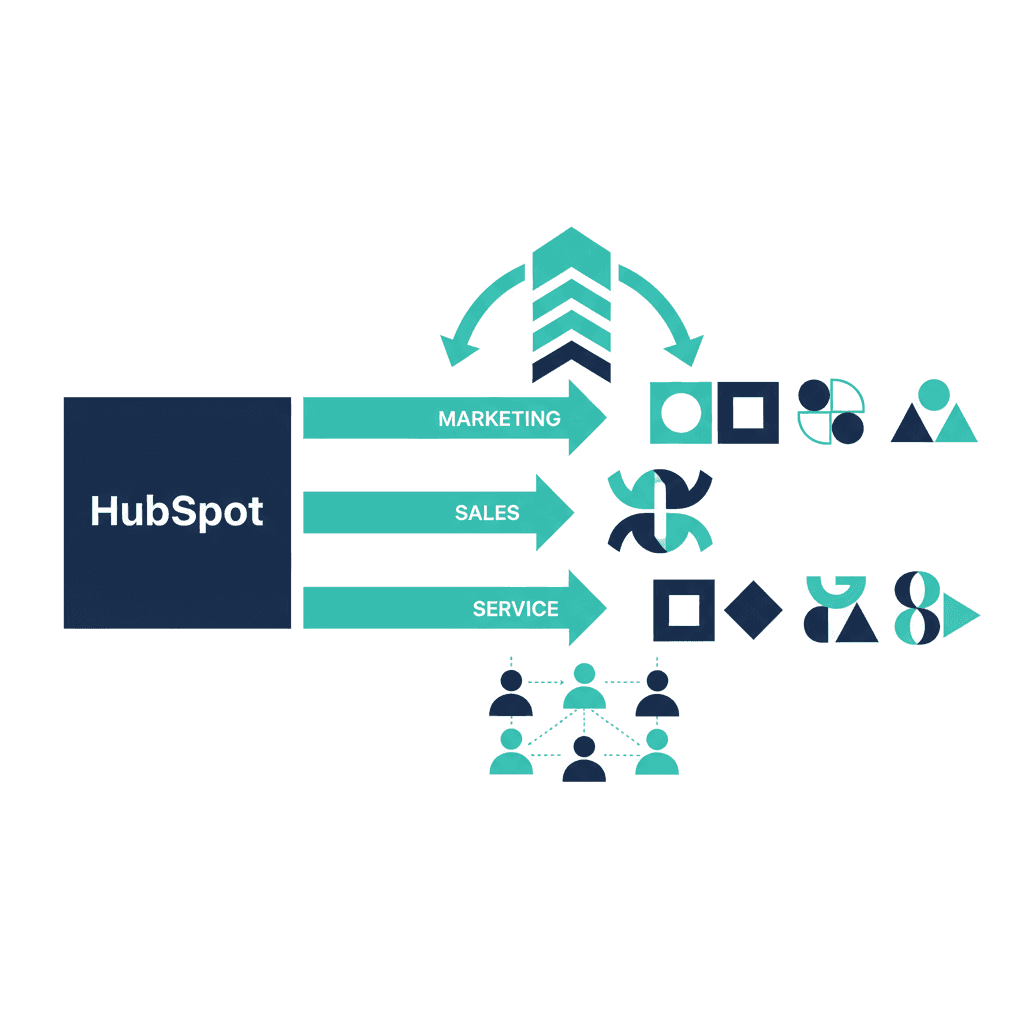
HubSpot's real advantage isn't the CRM in isolation — it's how tightly marketing, sales, and service tools work together without separate integrations or middleware. For a business whose growth is driven by inbound marketing, that integration is worth more than any single feature comparison suggests.
HubSpot is one of the platforms we compare directly in Salesforce vs HubSpot in 2026 and Salesforce vs Zoho vs HubSpot for Indian SMBs.
Who HubSpot is actually right for
Businesses running active inbound marketing — content, email campaigns, landing pages, lead scoring — benefit most from HubSpot, because those tools live in the same system as the CRM instead of syncing awkwardly between separate platforms. A marketing-driven business that wants to see the full journey from first website visit to closed deal in one place gets that natively here.
It's also the easier starting point for a team without dedicated CRM administration resources. HubSpot is built to be usable out of the box for straightforward use cases, without the implementation project that Salesforce typically requires even for basic setups.
What's actually in the box beyond the CRM
The free CRM covers contact and deal tracking. Marketing Hub adds landing pages, email campaigns, and lead scoring. Sales Hub adds sequences, meeting scheduling, and deal automation. Service Hub adds ticketing and a knowledge base. Each is priced and sold separately, which means the total cost depends heavily on which hubs you actually need — a common mistake is assuming "HubSpot" is one price when it's really a family of products that can be combined or kept minimal.
A concrete example
A B2B services company running a content marketing program — blog posts, gated whitepapers, email nurture sequences — can see, for any given deal in the pipeline, exactly which blog posts and emails that specific contact engaged with before becoming a lead. Replicating that view with a separate marketing platform and CRM typically requires custom integration work or a third-party connector; in HubSpot it's native.
What it actually costs
The CRM core is genuinely free and usable, not a crippled trial. Paid Marketing, Sales, and Service Hub tiers scale from around $20 a month up to several hundred, depending on contact volume and which hubs you need. This makes HubSpot easy to start with and scale gradually, rather than committing to a large licensing cost before you know what you'll actually use.
The most common mistake
Buying HubSpot for the CRM alone and not using the marketing tools that justify its pricing at higher tiers. If your business isn't running the inbound campaigns HubSpot is built around, a chunk of what you're paying for goes unused — and a CRM-only tool like Zoho or a leaner Salesforce tier may cost less for the same core functionality.
The honest recommendation
Choose HubSpot if marketing and sales genuinely need to work as one system in your business, and you want a platform your team can start using without a dedicated implementation project. If your growth doesn't depend on inbound marketing, weigh it against Salesforce and Zoho on CRM fundamentals alone rather than paying for integration you won't use.
Frequently asked questions
How much does HubSpot cost?
HubSpot's CRM core is free; paid Marketing, Sales, and Service Hub tiers scale from roughly $20 to several hundred dollars per month depending on contacts and features. The free tier is genuinely usable, not just a trial.
Is HubSpot easier to set up than Salesforce?
Yes, meaningfully — HubSpot is built to be usable without a dedicated implementation partner for straightforward use cases, while Salesforce typically needs configuration work even for basic setups. See the full comparison in [Salesforce vs HubSpot in 2026](/blog/salesforce-vs-hubspot-2026).
Is HubSpot only good for marketing?
No — Sales and Service Hubs cover pipeline management and support ticketing, but marketing integration is where HubSpot's advantage over Salesforce and Zoho is clearest, especially for businesses running active inbound campaigns.
Yash
Founder & Principal Consultant, Ynexgen
Yash leads Ynexgen, helping small and mid-sized businesses turn technology into a stronger foundation for growth — 7+ years across Salesforce CRM, websites, and AI adoption.