Every growing business eventually outgrows spreadsheets and sticky notes for tracking customers. UK businesses have a few specific triggers worth watching for on top of the general signs. (The equivalent for Singapore businesses has its own twist — a grant that subsidises the cost.)
The general signs (apply everywhere)
You've lost track of a follow-up. Two people have separately contacted the same prospect. Reporting on sales activity takes real manual effort each month. If any of these are true, a CRM is probably overdue regardless of location — see Signs Your Business Needs a CRM for the full general list.
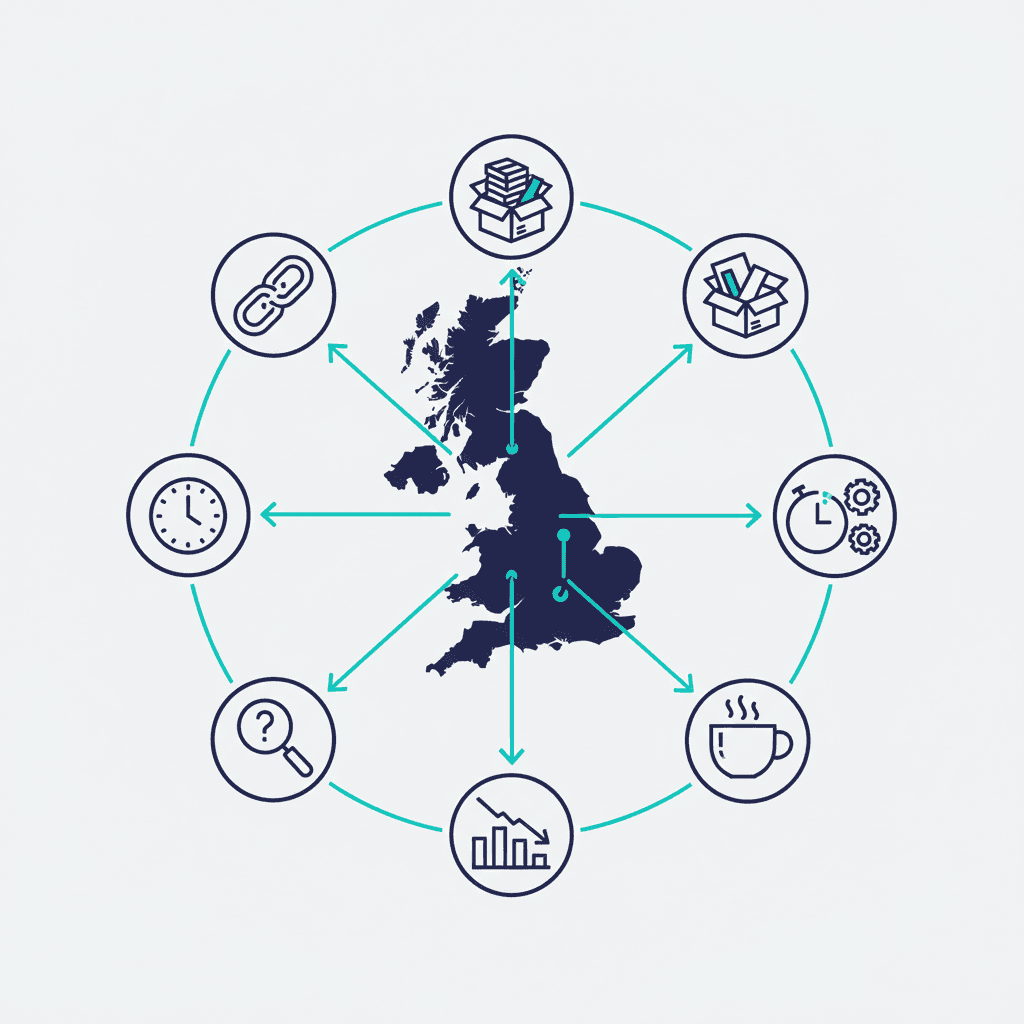
UK-specific triggers
Data subject access requests are becoming a real burden. Under UK GDPR, customers can request to see all the personal data you hold on them, and you're required to respond within a set timeframe. Once your customer records are scattered across email, spreadsheets, and a few different tools, locating everything tied to one person and compiling a genuine, complete response gets slow and risky. A CRM that centralizes customer data makes this a search, not an investigation.
You're approaching or past the VAT registration threshold. The UK's VAT threshold (currently £90,000 in taxable turnover) isn't a CRM trigger by itself, but it's a reasonable proxy — businesses crossing it have usually also outgrown informal customer tracking around the same time, simply because there's more revenue, more customers, and more complexity to manage.
You're expanding beyond a single UK region or into the wider EU. Once a business is dealing with customers or prospects across multiple regions with even slightly different follow-up cadences or account handling, informal tracking (a shared spreadsheet, personal memory) breaks down fast — a CRM's structured records don't care how many regions you're covering.
A concrete example of the failure mode
A UK professional services firm with three partners, each tracking their own client relationships in personal notebooks or a shared spreadsheet nobody quite trusts, gets a subject access request from a former client. Compiling a genuinely complete answer means checking three people's memories, several email inboxes, and an out-of-date spreadsheet — a process that can easily take a full day and still risk missing something. The same request against a properly maintained CRM is a five-minute search.
What to check before choosing
Whichever CRM you pick, verify it supports UK GDPR requirements natively — see UK GDPR and Your CRM for the specific things to check (lawful basis tracking, straightforward data export/deletion, consent management).
The honest recommendation
If you're seeing the general signs, don't wait for a UK-specific trigger to act — but if you're on the fence, a real data subject access request that takes half a day to compile manually is usually the moment that settles the decision. If you'd like help choosing and setting up the right fit, see our Salesforce CRM consulting.
Frequently asked questions
Is there a UK-specific reason to adopt a CRM beyond general growth signs?
Yes — UK GDPR compliance obligations (data subject access requests, consent tracking) become materially harder to fulfil manually once you're past a small number of customer records, which is a UK/EU-specific pressure that doesn't apply the same way elsewhere.
What VAT threshold is relevant here?
The UK's VAT registration threshold (currently £90,000 in taxable turnover) often coincides with a business outgrowing informal customer tracking — it's a rough proxy for "you've grown past a spreadsheet," not a CRM requirement itself.
Should a UK business worry about GDPR before choosing a CRM?
Yes — see our dedicated guide on [UK GDPR and Your CRM](/blog/uk-gdpr-compliance-crm-small-business) for what to check before committing to a platform.
Yash
Founder & Principal Consultant, Ynexgen
Yash leads Ynexgen, helping small and mid-sized businesses turn technology into a stronger foundation for growth — 7+ years across Salesforce CRM, websites, and AI adoption.