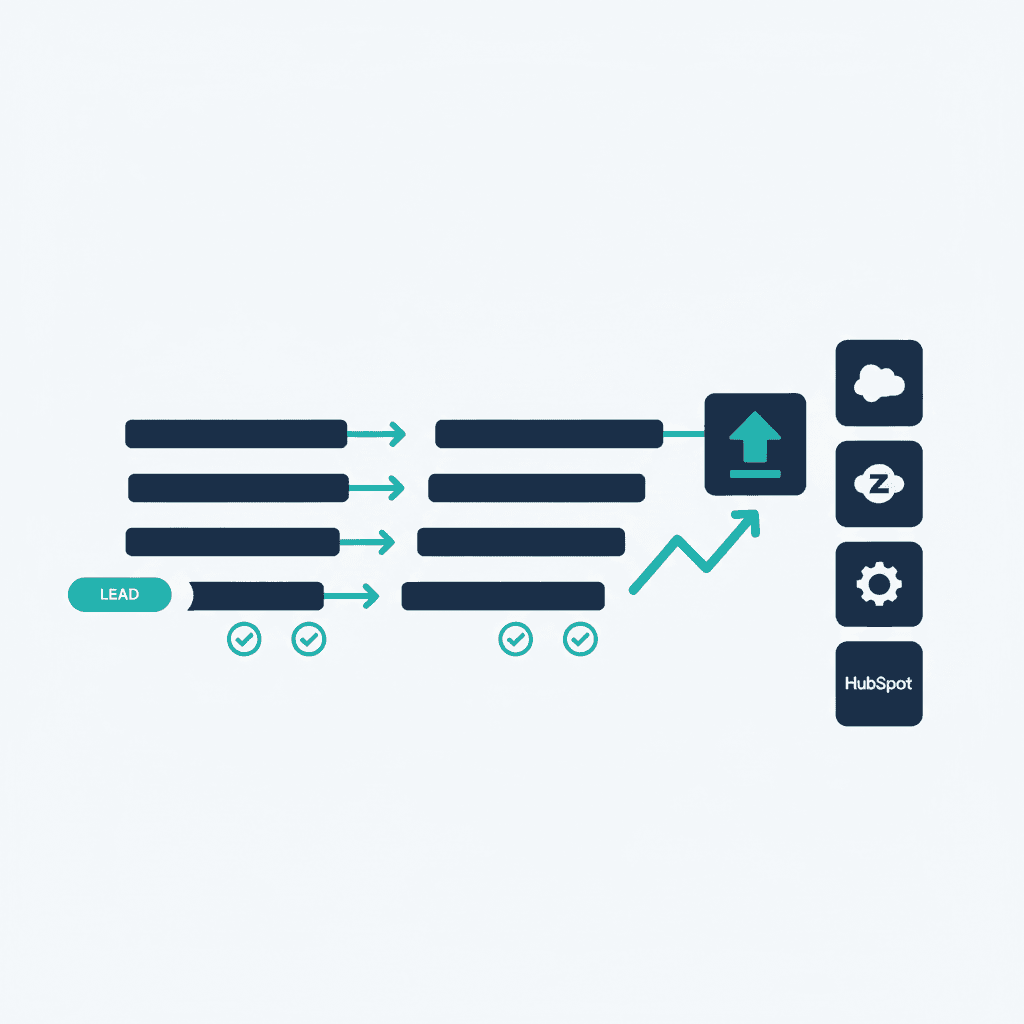
CRM pipeline stages are the columns your deals move through inside your CRM — typically 5 to 7, from new lead to closed won or lost. The hard part isn't naming them; it's giving each stage a checkable exit criterion so the data stays trustworthy across your whole team. Here's how to set them up in any CRM (Salesforce, Zoho, HubSpot).
Skip the guesswork: the free sales pipeline stage builder generates a 4–6 stage pipeline tuned to how you sell — with exit criteria — in about a minute.
A standard CRM pipeline
| Stage | Exit criterion (what advances it) |
|---|---|
| New / Lead | Contact captured, not yet qualified |
| Qualified | Budget, authority, need and timeline confirmed |
| Meeting / Demo | Discovery or demo completed |
| Proposal | Quote or proposal sent |
| Negotiation | Terms under discussion |
| Closed Won / Lost | Signed, or a documented reason for loss |
The names matter less than the rule: a stage should represent something the buyer did, not something your rep hopes happened. That single discipline is the difference between a pipeline you can forecast and one nobody trusts. It's the same framework in the sales pipeline stages pillar.
How to set them up in your CRM
- Start from your real process, not the CRM's default template — the default rarely matches how you actually sell.
- Write an exit criterion for each stage and put it where reps can see it.
- Cap it at 5–7 stages. More granularity feels precise and just creates data-entry drag (the enemy of adoption).
- Add automation — stage changes triggering tasks, alerts or follow-ups.
- Enforce "closed lost" with a reason so you can learn from losses.
Tool-specific notes
Salesforce calls these Opportunity Stages, Zoho calls them Deal Stages, HubSpot calls them Deal Stages too — the concept is identical, only the labels differ. Getting them right is foundational CRM setup, and it's part of any Salesforce or CRM implementation. New to CRM entirely? Start with what a CRM is and why you need one. For the deeper framework, see best practices.
Frequently asked questions
What are CRM pipeline stages?
They're the stages deals move through inside your CRM — typically 5 to 7, such as New/Lead, Qualified, Meeting/Demo, Proposal, Negotiation, and Closed Won/Lost. Salesforce calls them Opportunity Stages; Zoho and HubSpot call them Deal Stages. The concept is identical.
How many pipeline stages should a CRM have?
Five to seven. Fewer than four and you can't see where deals stall; more than seven adds data-entry drag and false precision. The names matter less than giving each stage a checkable exit criterion tied to a buyer action.
How do I set up pipeline stages in my CRM?
Start from your real sales process (not the CRM's default template), write an exit criterion for each stage, cap it at 5–7 stages, add automation for stage changes, and require a documented reason on 'closed lost' so you can learn from losses.
Yash
Founder & Principal Consultant, Ynexgen
Yash leads Ynexgen, helping small and mid-sized businesses turn technology into a stronger foundation for growth — 7+ years across Salesforce CRM, websites, and AI adoption.