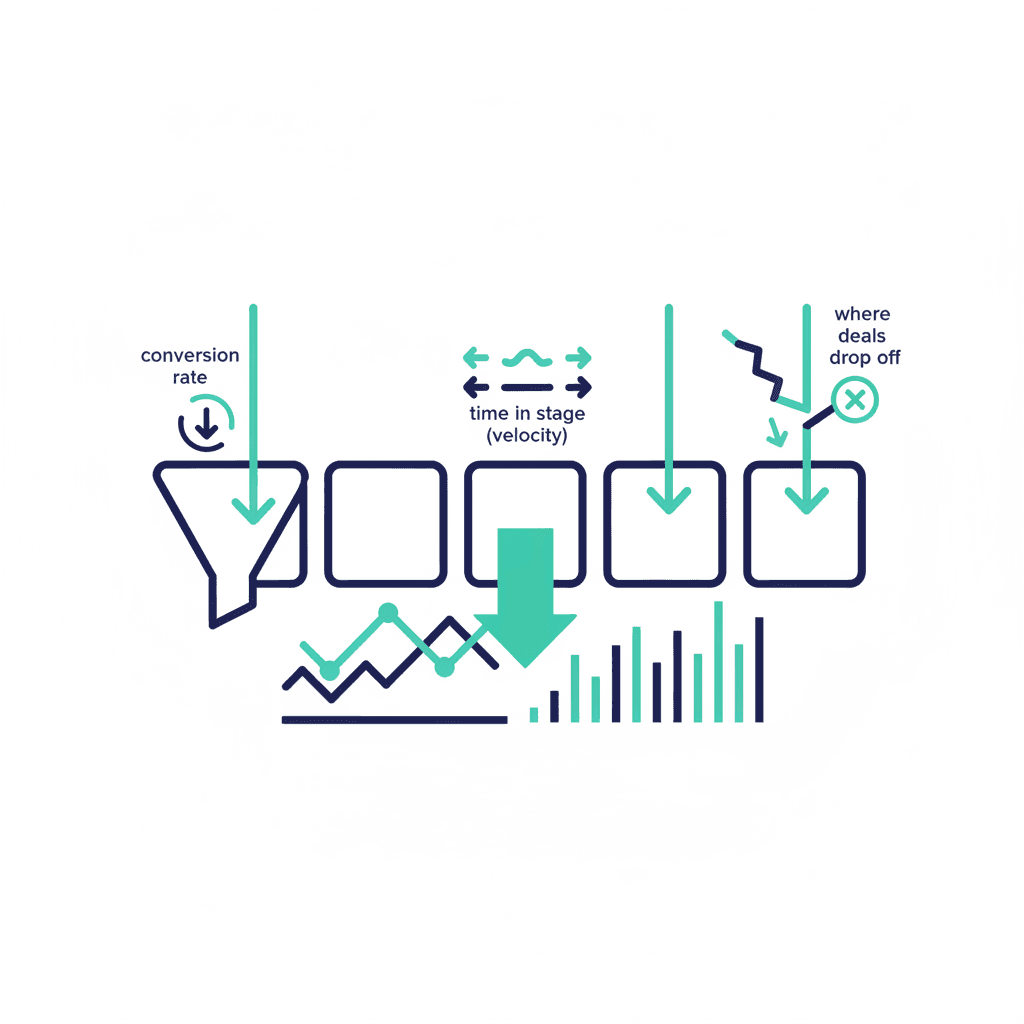
Sales pipeline stage analysis means measuring three things at every stage: conversion rate (how many deals advance), average time in stage (velocity), and where deals drop off. Together they tell you exactly which stage is leaking revenue — information a total pipeline value can't give you. (Running partnerships instead of a transactional pipeline? See business development pipeline stages.) Here are the metrics that matter and how to read them.
The three core metrics
- Stage conversion rate. Of deals that enter a stage, what percentage advance? A stage where 80% enter but 30% advance is your bottleneck.
- Time in stage (velocity). How long deals sit in each stage. A stage that suddenly slows is an early warning — often a qualification or process problem.
- Drop-off / leakage. Where deals die. Concentrated losses at one stage point to a fixable cause (pricing, a missing proof point, a procurement wall).
How to read them together
- High drop-off + long time in stage = deals stalling and dying there. Usually the stage definition or the sales motion needs work.
- Fast velocity + low conversion = you're disqualifying fast (fine) or losing winnable deals (not fine) — check loss reasons.
- Healthy conversion + slow velocity = you win, but slowly; a cash-flow and forecasting issue worth fixing.
What you need to make this work
Clean stage data — which comes from checkable exit criteria and disciplined "closed lost" reasons. Garbage stage data produces garbage analysis, so the CRM setup is the prerequisite. This is also where a lot of claimed CRM ROI falls apart — the number only means something if the pipeline data is real.
Turn analysis into action
The point isn't dashboards; it's fixing the worst stage, then re-measuring. Start by defining stages properly with the pipeline stage builder and the pipeline framework. Setting up this reporting in Salesforce or another CRM is part of our CRM consulting work.
Frequently asked questions
What is sales pipeline stage analysis?
Measuring three things at each stage: conversion rate (what percentage of deals advance), average time in stage (velocity), and where deals drop off. Together they pinpoint which stage is leaking revenue — something a single total pipeline value can't show you.
What metrics matter most in pipeline analysis?
Stage conversion rate (find the bottleneck stage), time in stage (spot stalls early), and drop-off/leakage (where deals die). Read them together: high drop-off plus long time in stage means deals are stalling and dying there — usually a stage-definition or sales-motion problem.
What do I need for accurate pipeline analysis?
Clean stage data, which comes from checkable exit criteria and disciplined closed-lost reasons. Garbage stage data produces garbage analysis — so proper CRM stage setup is the prerequisite for any meaningful reporting.
Yash
Founder & Principal Consultant, Ynexgen
Yash leads Ynexgen, helping small and mid-sized businesses turn technology into a stronger foundation for growth — 7+ years across Salesforce CRM, websites, and AI adoption.