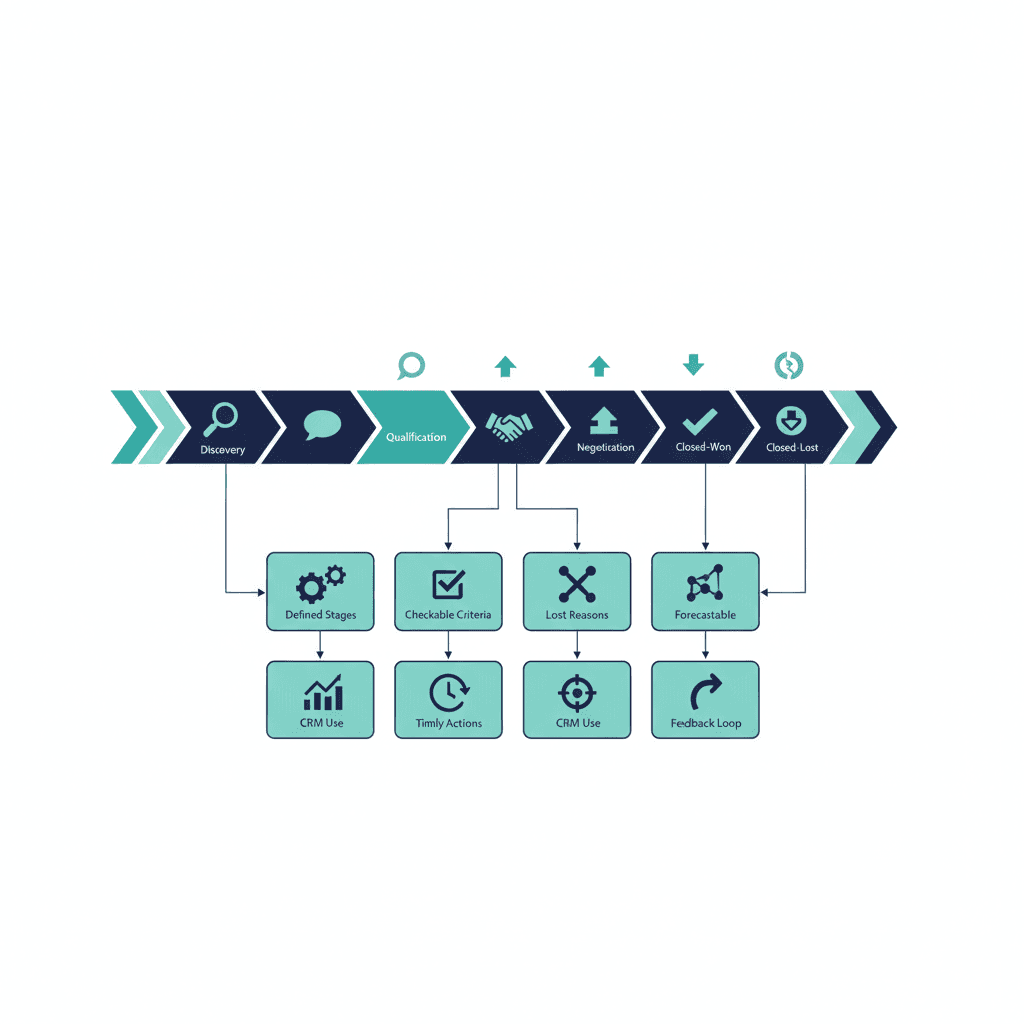
The best sales pipelines follow a handful of rules: 5–7 stages (not twelve), each defined by a buyer action rather than a rep's gut feel, each with a clear exit criterion, and a strict "closed lost with a reason" discipline. Here are the eight best practices that separate a pipeline you can actually forecast from one nobody trusts.
The 8 best practices
- Keep it to 5–7 stages. More stages feel precise but create data-entry drag and false accuracy. Fewer than four and you can't see where deals stall.
- Define stages by buyer actions, not rep hope. "Qualified" means budget and authority were confirmed, not "they seemed interested." This is the core rule from the pipeline stages framework.
- Give every stage a checkable exit criterion. If two reps would disagree whether a deal is in Stage 3, the definition is too vague.
- Make "closed lost" require a reason. Loss reasons are the cheapest market research you'll ever get.
- Don't let deals skip stages. Skipping means the stages don't match reality — fix the stages, not the data.
- Review stuck deals, not just the total. A deal sitting in one stage too long is your earliest churn signal — see stage analysis.
- Match stages to your business. Enterprise, SaaS and business-development pipelines legitimately differ.
- Keep it usable. The most accurate pipeline is worthless if reps won't maintain it — adoption beats sophistication every time.
The one that matters most
If you do only one thing: tie every stage to a buyer action with a checkable exit criterion. Everything else is refinement. Generate a pipeline that already follows these rules with the free pipeline stage builder, or set them up in your CRM with the CRM pipeline stages guide.
Frequently asked questions
What are sales pipeline best practices?
Keep 5–7 stages, define each by a buyer action (not rep optimism), give every stage a checkable exit criterion, require a reason on closed-lost, don't let deals skip stages, review stuck deals, match stages to your business type, and keep it usable so reps actually maintain it.
What's the single most important pipeline rule?
Tie every stage to a buyer action with a checkable exit criterion. If two reps could disagree about which stage a deal is in, the definition is too vague — and vague definitions are the reason pipeline data becomes untrustworthy.
Why require a reason for closed-lost deals?
Loss reasons are the cheapest market research you'll get. Patterns in why you lose (price, timing, a missing feature, a competitor) tell you what to fix in your product, pricing or sales motion — but only if reps log them consistently.
Yash
Founder & Principal Consultant, Ynexgen
Yash leads Ynexgen, helping small and mid-sized businesses turn technology into a stronger foundation for growth — 7+ years across Salesforce CRM, websites, and AI adoption.