A website builder's monthly price and a custom development quote look nothing alike on day one — and how long each actually takes to build differs just as much. The real comparison has to include what happens in year two and year three, which is where the sticker-price gap often closes or reverses.
The upfront comparison (where builders clearly win)
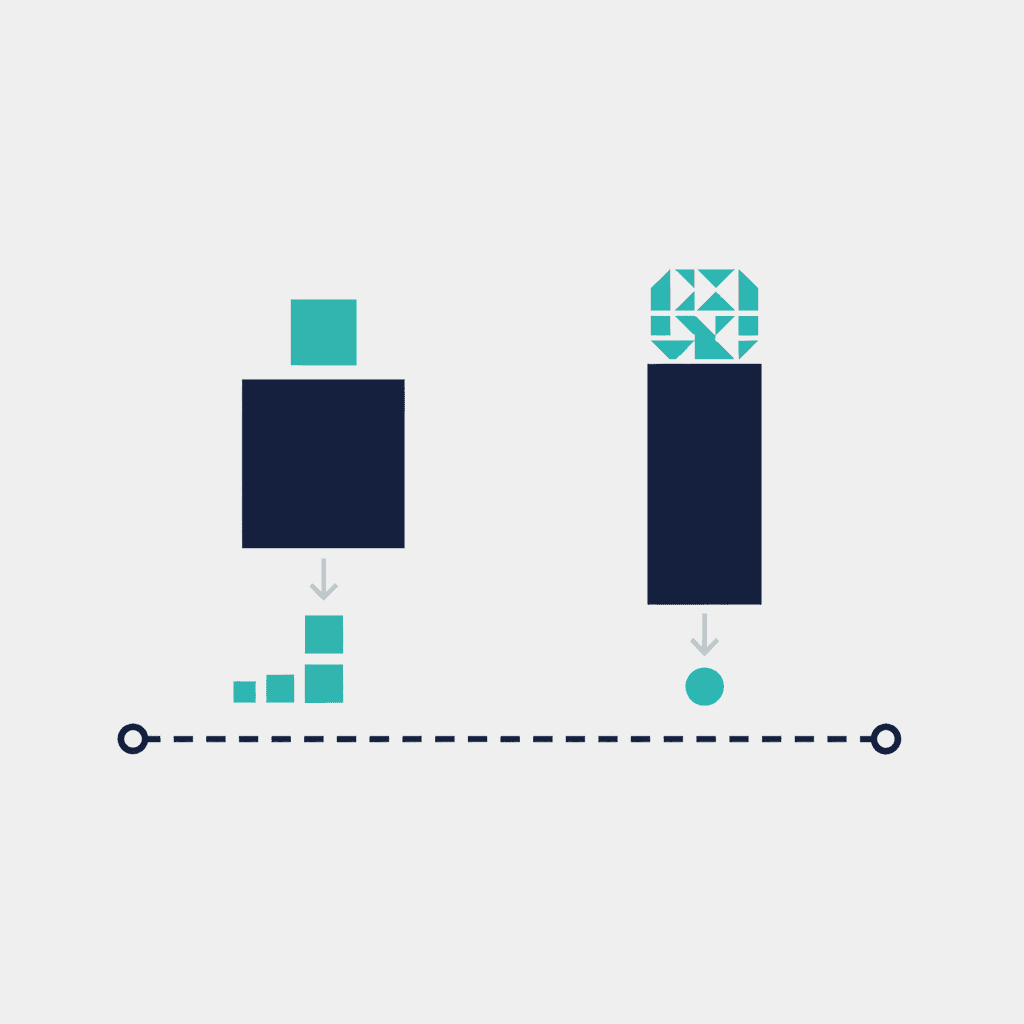
A website builder (see our comparisons of WordPress vs Webflow vs Squarespace) typically runs $15-100/month with no separate development cost. Custom development for an equivalent small business site runs $3,000-15,000+ upfront, depending on complexity, before any hosting or maintenance is added. On day one, the builder is unambiguously cheaper.
What each option leaves out of its headline number
Website builders don't mention: the cost of hitting a functionality wall. If your business needs something the builder's plugin ecosystem or template system genuinely can't do, you either compromise on what you wanted or pay for a migration to something more flexible — often more expensive in hindsight than if you'd chosen custom from the start.
Custom development doesn't mention: ongoing maintenance. A custom site needs someone monitoring security, applying updates, and fixing whatever breaks, indefinitely. This is either an in-house responsibility (real time cost) or a maintenance retainer (real dollar cost, often $200-800/month) — and it doesn't stop after year one the way some businesses assume.
The 3-year real cost estimate
For a straightforward small business site with modest content needs: a website builder runs roughly $500-3,600 total over 3 years (subscription only, no functionality gaps hit). Custom development runs roughly $3,000-15,000 upfront plus $7,200-28,800 in maintenance over 3 years (at $200-800/month) — meaning custom development's total 3-year cost is typically 3-10x higher than a builder's, even before counting a builder's occasional plugin costs.
The number that flips this: if your business needs functionality a builder genuinely can't provide — and you'd otherwise pay for an expensive migration later — custom development's higher cost becomes the cheaper path over a long enough horizon. This is a real calculation, not a rule of thumb; it depends entirely on your specific functionality needs.
The most common mistake
Choosing custom development "to be safe" for a business whose needs a website builder would have fully covered, then paying 5-10x more over three years for flexibility that was never actually used. The other direction — choosing a builder for a business that genuinely needs custom functionality, then discovering the wall six months in — is just as costly, in migration time and cost.
The honest recommendation
Default to a website builder unless you can name a specific, concrete functionality requirement it can't meet — not a hypothetical future one. If you can name that requirement, get a real custom development quote and compare it against the builder's true 3-year cost, not just its monthly price, before deciding. For help making that call for your specific situation, see our website development services.
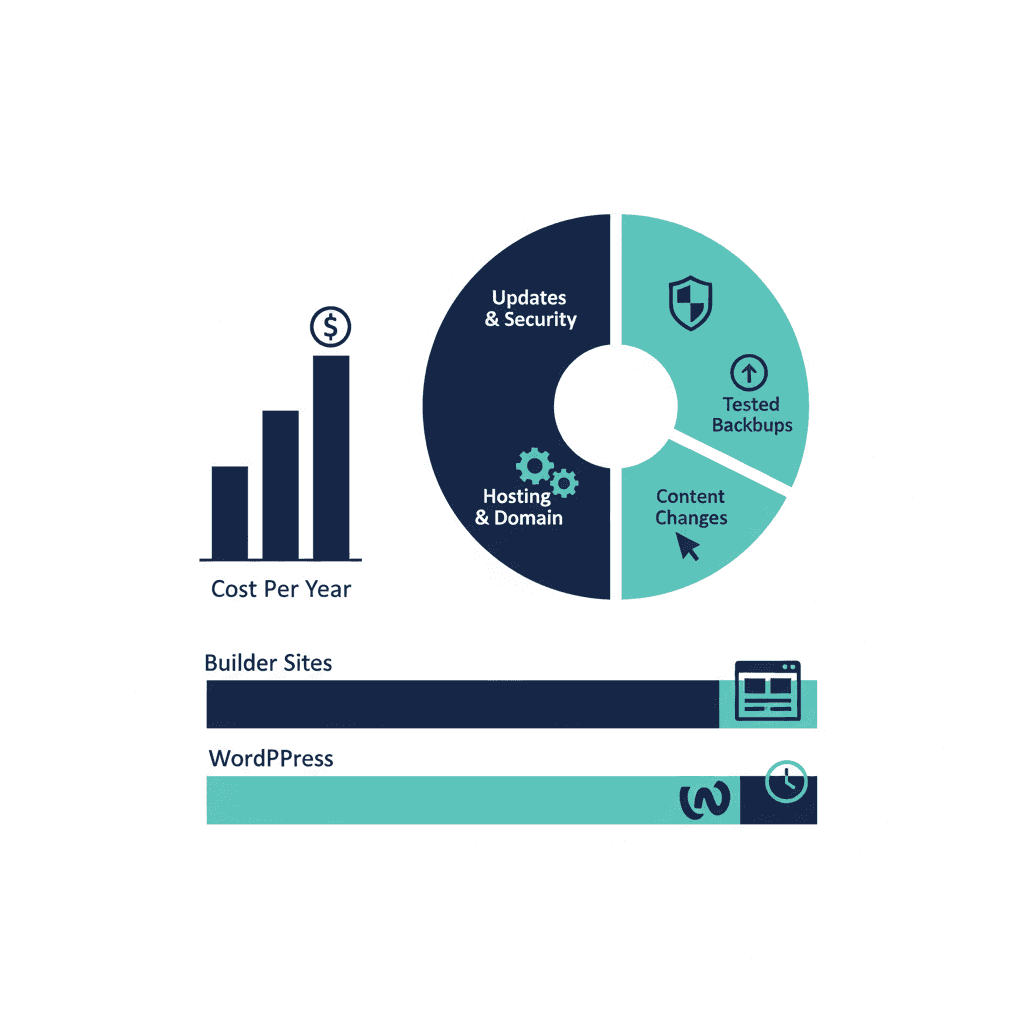
Whichever route you pick, budget the running costs too — website maintenance costs differ sharply between builders and custom sites.
Frequently asked questions
Is a website builder always cheaper than custom development?
Upfront, almost always yes. Over 3-5 years, it depends on how much the business's needs diverge from what a builder's templates and plugins support — heavy customization needs can erode a builder's cost advantage over time.
What's the biggest hidden cost of custom development?
Ongoing maintenance — a custom site needs someone (in-house or contracted) to handle updates, security patches, and bug fixes indefinitely, which a website builder's subscription bundles in automatically.
What's the biggest hidden cost of a website builder?
Hitting a wall on functionality the platform doesn't support, then either compromising on what you actually wanted or paying for a migration to a more flexible platform later.
Yash
Founder & Principal Consultant, Ynexgen
Yash leads Ynexgen, helping small and mid-sized businesses turn technology into a stronger foundation for growth — 7+ years across Salesforce CRM, websites, and AI adoption.