Salesforce gives nonprofits two products that do the same core job in two very different ways. The Nonprofit Success Pack (NPSP) is a free managed package that has run fundraising on Salesforce for over a decade, built on custom objects and the Household account model. Nonprofit Cloud (NPC) is the successor Salesforce launched in 2023 — not a package but a native product, built on standard objects and Person Accounts, and the place where every new nonprofit feature now lands. NPSP still works and is still supported. NPC is where the roadmap points.
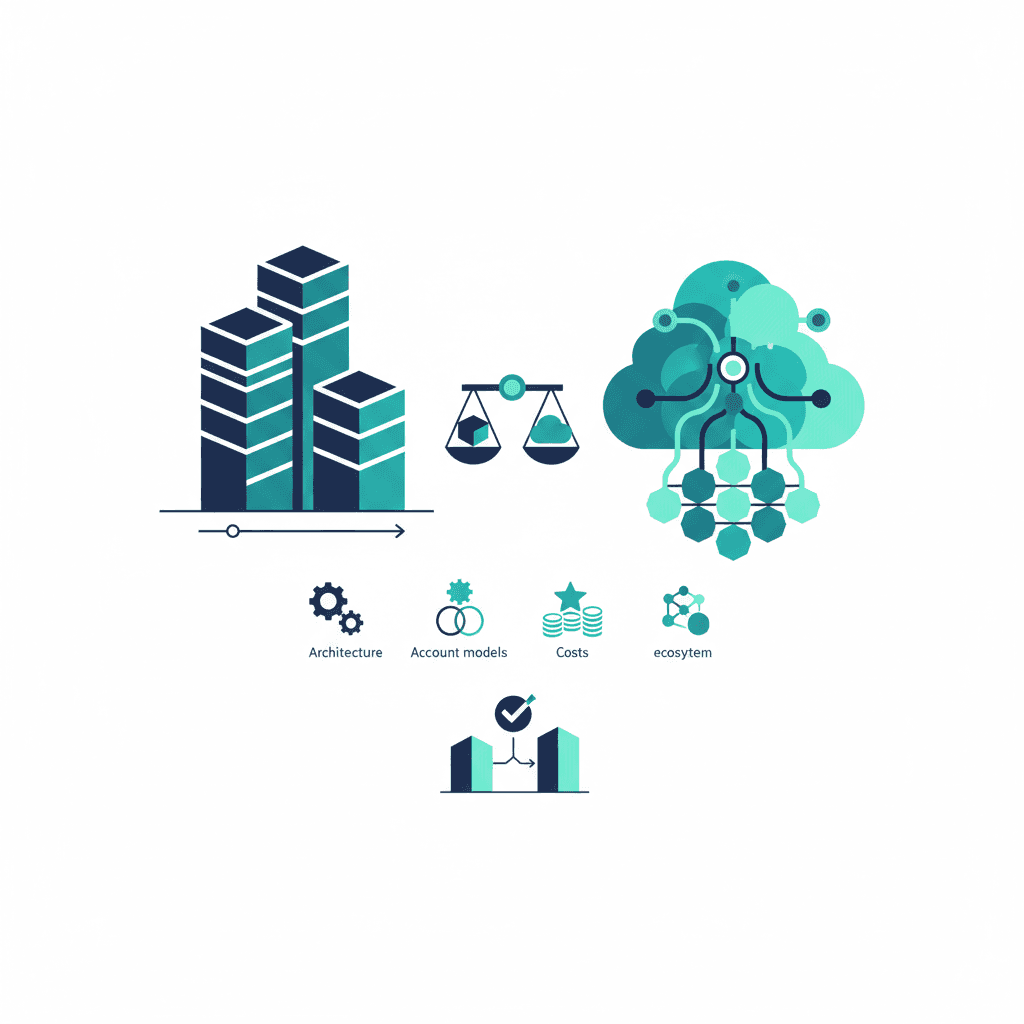
That's the one-paragraph version. The rest of this post is the detail — architecture, account models, features, costs and ecosystem — so you can tell which product fits your organization.
Already on NPSP and wondering whether to move? The free NPSP → Nonprofit Cloud readiness check scores your org in six questions and gives an honest verdict: migrate now, start planning, or wait. No signup.
First, the names — because Salesforce's aren't consistent
The naming causes genuine confusion, so to be explicit about what refers to what:
- NPSP = Nonprofit Success Pack. Also written "Salesforce Nonprofit Success Pack," and occasionally still called by its old name, the Nonprofit Starter Pack.
- NPC = Nonprofit Cloud. A community abbreviation more than an official one — Salesforce's own materials usually write "Nonprofit Cloud" in full, which is why searching "NPC" turns up inconsistent results.
- Agentforce Nonprofit = the name Salesforce gave Nonprofit Cloud in a December 2025 rebrand. Same product, same architecture below — just a newer name you'll see increasingly in current vendor and Salesforce materials. What the rename actually changes covers it in full.
- Salesforce for Nonprofits is the umbrella brand covering both, plus Education Cloud and the Power of Us donation program. It isn't a third product.
- Nonprofit Cloud Case Management was a separate older product. If you find documentation using that name, check the date — it predates the 2023 Nonprofit Cloud.
So "NPSP vs NPC," "Nonprofit Success Pack vs Nonprofit Cloud," and "Salesforce NPC vs NPSP" are all the same question. This page answers it.
NPSP vs NPC at a glance
| NPSP (Nonprofit Success Pack) | Nonprofit Cloud (NPC) | |
|---|---|---|
| What it is | Free managed package installed on top of Salesforce | Native Salesforce product, launched 2023 |
| Account model | Household Accounts | Person Accounts |
| Data architecture | Custom objects layered on the platform | Standard objects + Salesforce Industries components |
| Program & case management | Third-party apps or workarounds | Built in: Program, Case, Outcome and Grantmaking modules |
| New feature investment | Supported, but few new features | All new nonprofit features, including AI |
| Ecosystem maturity | 10+ years of apps, consultants and community answers | Growing fast — verify app support vendor by vendor |
| Licensing | 10 free subscriptions via Power of Us, discounted beyond | 10 free subscriptions via Power of Us, discounted beyond |
What NPSP actually is
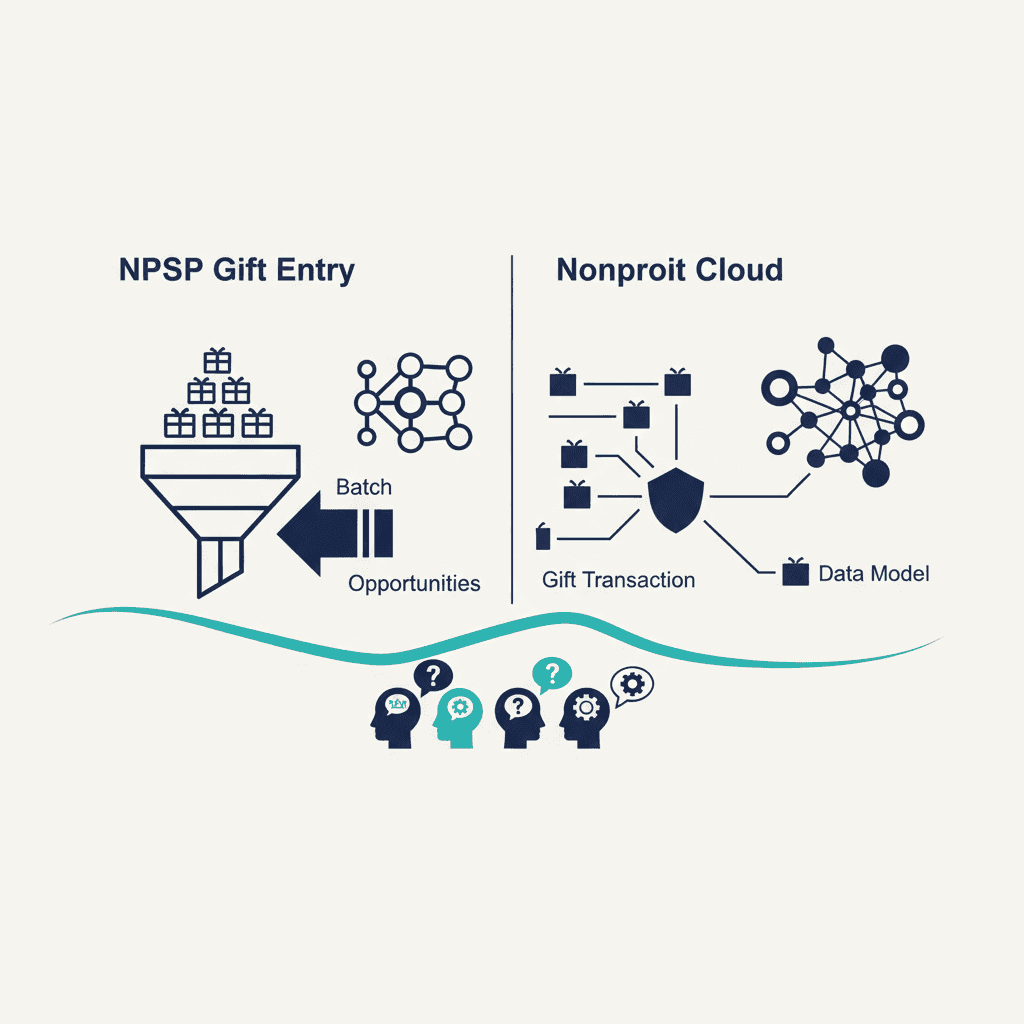
NPSP is a managed package — a bundle of custom objects, fields and automation installed on top of standard Salesforce. Donations are Opportunities with nonprofit-specific behavior, constituents are Contacts grouped into Household Accounts, and recurring giving, rollups and acknowledgements are handled by package logic that Salesforce ships and maintains.
Its age is its strength. A decade-plus of real-world use means the edge cases are documented, thousands of consultants know it deeply, and the AppExchange ecosystem around it — payment processors, email tools, event apps — is mature. When something breaks at 4pm before a giving-day campaign, someone has already posted the fix.
What Nonprofit Cloud actually is
NPC is not a package you install — it's a Salesforce product line in its own right, introduced in 2023. It uses standard platform objects plus Salesforce Industries components (the same engine behind Salesforce's financial services and health products) to model fundraising, programs, cases, outcomes and grantmaking natively.
Practically, that means capabilities NPSP never had built in: program and case management for service-delivery organizations, outcome tracking that connects activities to impact, and grantmaking for foundations. It also means NPC picks up platform-level investment automatically — Data Cloud, Flow and Salesforce's AI features arrive on NPC first, because it shares the architecture those features are built for.
The biggest technical difference: Households vs Person Accounts
NPSP models people as Contacts grouped under a Household Account. NPC models each person as a Person Account — one record that is both the account and the contact.
This sounds like plumbing, and it is — but it's the plumbing that matters most. The two models are structurally incompatible, which is why moving from NPSP to NPC is a real data migration project, not an upgrade button. Relationship mapping, soft credits and household giving summaries all have to be rethought in the Person Account world. If you take one technical fact away from this comparison, take this one.
Features: where NPC is genuinely ahead
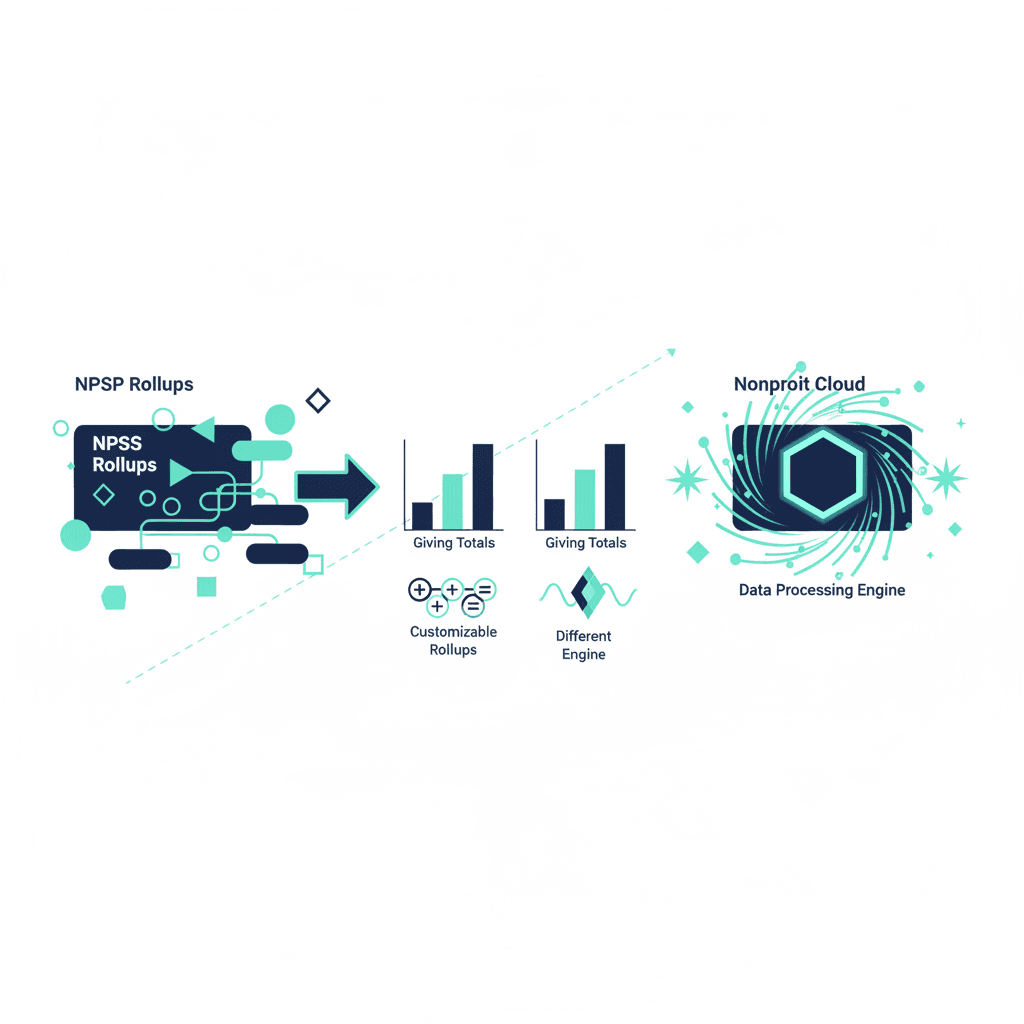
For pure donation tracking, the two products are closer than the marketing suggests — NPSP handles gifts, recurring donations, and donor management well, and thousands of organizations run exactly that happily (though the two calculate giving totals with different engines underneath).
The gap opens in three places:
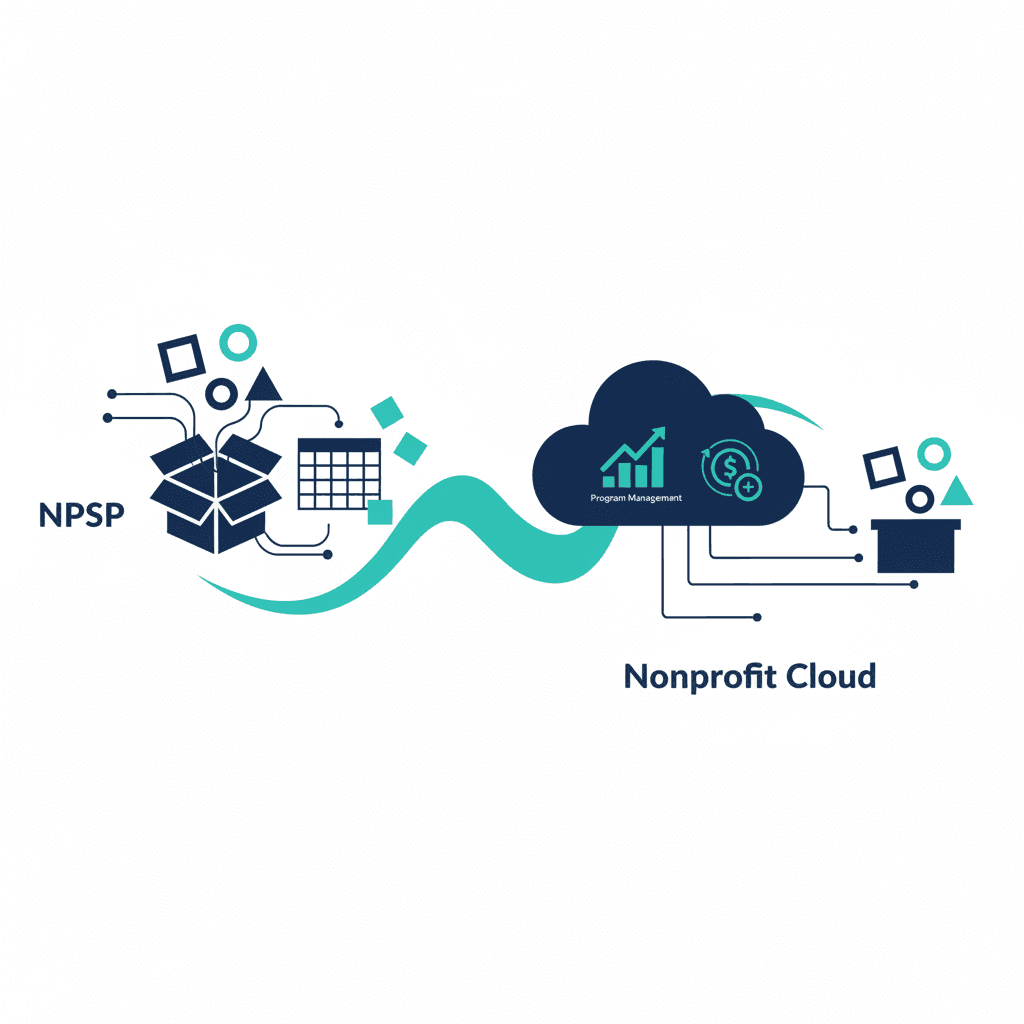
- Program and case management. If your organization delivers services — client intake, case notes, program enrollment, outcome reporting — NPC has purpose-built modules where NPSP orgs typically bolt on third-party apps or track programs in spreadsheets next to Salesforce. What this gap actually looks like covers it in depth.
- Data and AI. New Salesforce capabilities — Data Cloud segmentation, AI assistants, agent-based automation — are built against NPC's standard-object architecture. Some can be made to work with NPSP, but NPC is the assumed foundation. Agentforce for nonprofits is the clearest current example.
- Reporting across the mission. Because programs, cases, outcomes and fundraising live in one data model, NPC can answer questions like "which programs do our major donors actually fund, and what outcomes did those programs deliver?" without duct tape.
Where NPSP is still ahead
An honest comparison has to run in both directions, and two NPSP advantages are real:
- Ecosystem depth. Ten years of AppExchange apps, consultants who have seen your exact edge case, and community answers that already exist. NPC's ecosystem is growing quickly but it is younger.
- Known cost of ownership. An NPSP org that works has no migration project attached to it. That is worth something concrete, and it is why "stay for now" is a legitimate answer rather than just procrastination.
Costs: licenses are similar, implementations aren't
Both products are covered by Salesforce's Power of Us program: eligible nonprofits get their first 10 subscriptions free, with discounted pricing beyond that. On licensing alone, neither product is the budget decision.
The real cost difference is implementation — a migration typically runs $15,000–$60,000, over three to six months. NPSP setups are well-trodden and often cheaper — the pattern library is old and deep. NPC implementations run newer: the industries toolset is more powerful but less familiar, experienced NPC partners are fewer, and migrations from NPSP carry the account-model conversion work described above. A small, clean NPC implementation can take a few weeks; a complex migration takes months. For a phase-by-phase estimate against your own org's shape, the free Salesforce implementation timeline estimator includes a Nonprofit Cloud option.
The ecosystem question
This is the honest check before any commitment: NPSP's AppExchange ecosystem had a decade's head start, and some nonprofit apps and payment processors still support NPSP better than NPC. Vendor support for NPC has broadened considerably since 2023 — an integration that blocked a migration a year ago may not block it today — but the burden of proof is per-app. List every tool your organization can't operate without and verify each one against NPC before you commit either way.
Which one should your nonprofit run?
| Your situation | The answer | Why |
|---|---|---|
| New to Salesforce | Nonprofit Cloud | No legacy to unwind, same free licensing, and it's the product being actively built. Starting on NPSP today means inheriting a migration later. |
| On NPSP, running smoothly, fundraising only | Stay — and plan | NPSP is supported and a working system has value. Use the calm period to verify apps and clean data. |
| On NPSP, heavily customized and hard to maintain | Migrate sooner | You're already paying a migration's price in workarounds and admin drag, every year, with nothing to show for it. |
| Delivering programs or services | Migrate | Program, case and outcome management are native in NPC and bolt-ons in NPSP. This is the widest capability gap. |
| A foundation that makes grants | Migrate | Grantmaking is a built-in NPC module; NPSP has no real equivalent. |
| Blocked by a critical app that's NPSP-only | Wait — and re-check | A genuine blocker, but a time-limited one. Re-verify with the vendor at least annually. |
| Small org, tight budget, no admin capacity | Stay for now | The migration is a real project. Don't start one you can't staff; spend the time on data hygiene instead. |
Two situations that feel like blockers but usually aren't. Messy data has to be cleaned either way, and a migration is the best forcing function you'll get. Limited team capacity decides who runs the project, not whether it happens.
For the timing decision specifically, should you migrate now or wait is the decision framework, the readiness check will tell you in six questions whether your situation points to now, soon or later, and Salesforce work — including nonprofit migrations — is our core consulting service if you want a human to sanity-check the answer.
Frequently asked questions
What is the difference between NPSP and Nonprofit Cloud?
NPSP (Nonprofit Success Pack) is a free managed package installed on top of Salesforce, using custom objects and Household Accounts. Nonprofit Cloud (NPC) is a native Salesforce product launched in 2023, built on standard objects and Person Accounts, with program, case, outcome and grantmaking management built in. NPSP is supported but receives few new features; all new nonprofit investment goes to NPC.
Is Nonprofit Cloud replacing NPSP?
Not by decree — NPSP remains supported and Salesforce has announced no end-of-life date. But new nonprofit features, including AI capabilities, are built for Nonprofit Cloud, so NPC is the practical successor: new orgs start there, and existing NPSP orgs are deciding when to move rather than whether.
Is Nonprofit Cloud free for nonprofits?
Eligible nonprofits get their first 10 subscriptions free through Salesforce's Power of Us program — the same program that covers NPSP. Real costs come from additional licenses and, more significantly, implementation: NPC builds and NPSP-to-NPC migrations are typically larger projects than an NPSP setup.
What's the difference between NPSP and NPC account models?
NPSP groups Contacts into Household Accounts; NPC uses Person Accounts, where one record represents the individual. The models are structurally incompatible, which is why moving from NPSP to NPC is a data migration project — relationships, soft credits and household giving all need remapping.
Should a new nonprofit start with NPSP or Nonprofit Cloud?
Nonprofit Cloud. With no legacy data to convert, a new org gets NPC's native program management, the same free Power of Us licensing, and the product where Salesforce's nonprofit investment is actually landing. Starting on NPSP today means inheriting a migration later.
Can NPSP and Nonprofit Cloud run together?
Not in the same org — they model constituents in incompatible ways, so an organization runs one or the other. Moving between them means migrating to a new NPC org, which is why most NPSP orgs plan the switch as a project rather than an upgrade.
Does NPSP have any advantages over Nonprofit Cloud?
Two real ones. Its AppExchange ecosystem had a decade's head start, so apps, experienced consultants and documented edge cases are more plentiful. And an NPSP org that already works has no migration project attached to it — which is why 'stay for now' is a legitimate answer, not just procrastination.
Yash
Founder & Principal Consultant, Ynexgen
Yash leads Ynexgen, helping small and mid-sized businesses turn technology into a stronger foundation for growth — 7+ years across Salesforce CRM, websites, and AI adoption.