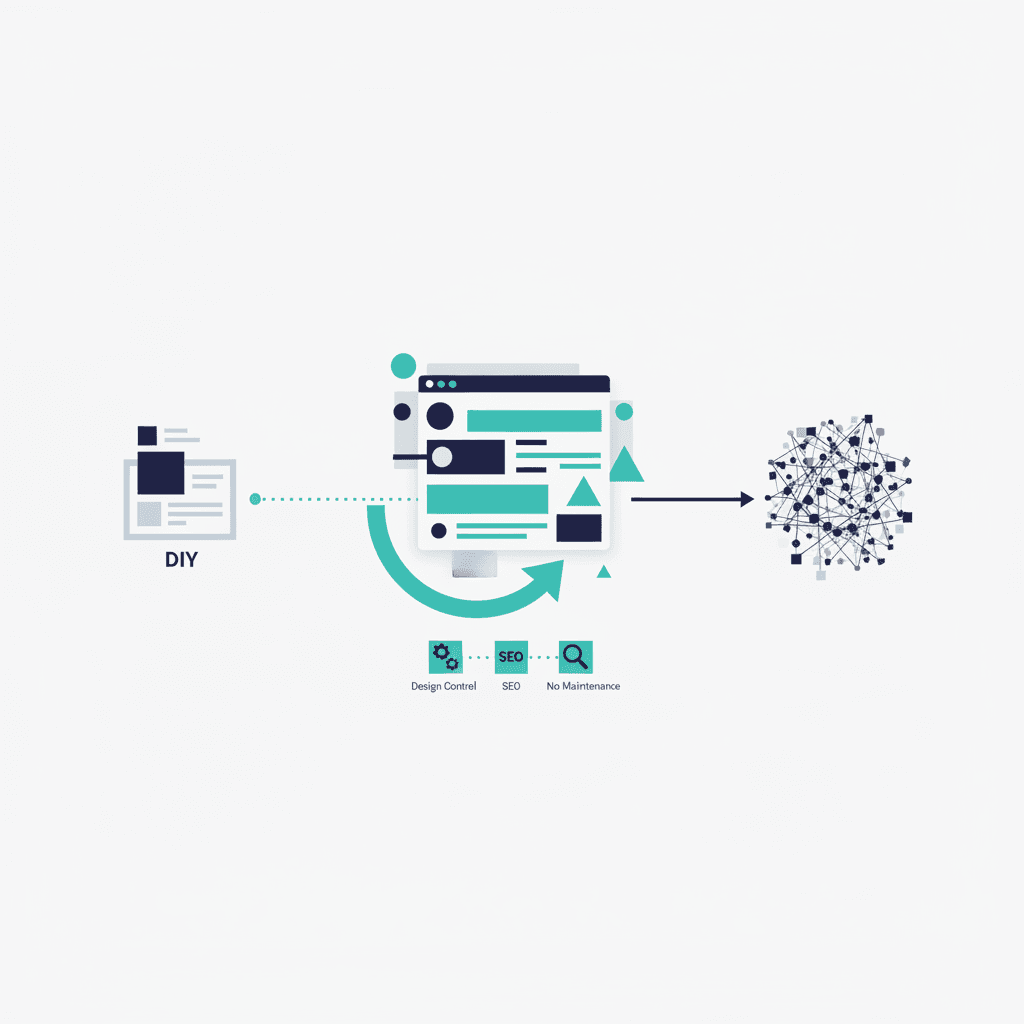
Webflow occupies a specific middle ground: it offers professional design quality and genuine SEO control — closer to a custom-built site than a template platform — without the hosting and security management that comes with WordPress.
This is one of three platforms we compare directly in WordPress vs Webflow vs Squarespace in 2026 — see also WordPress and Squarespace on their own terms. Not sure it's the right one for you? The free website platform picker asks six questions and gives an honest verdict.
Who Webflow is actually right for
Businesses that need professional design quality and want genuine control over on-page SEO elements — heading structure, page speed, clean semantic markup — benefit from Webflow's visual builder, which produces cleaner output than most template platforms while remaining far more approachable than hand-coding a site. It's a strong fit for a business willing to hire a designer or invest time learning the platform, in exchange for more flexibility than Squarespace allows without WordPress's ongoing maintenance burden.
Marketing teams that run frequent landing-page experiments also do well on Webflow — its CMS and visual editing make launching a new page or variant fast without needing a developer for every change, which is a real advantage over a from-scratch custom build.
Who Webflow is NOT right for
A business with no design or technical resource at all, and no plan to hire one, will likely find Webflow frustrating rather than empowering — its power comes precisely from the granular control that a true beginner doesn't yet know how to use well. If that describes your situation, Squarespace's more opinionated, simpler builder will get you to a usable site faster. Webflow is also not the right fit for a large multi-author content operation (dozens of blog posts a month, many contributors) — its CMS is capable, but WordPress's ecosystem is built more specifically around high-volume content publishing.
What it actually costs
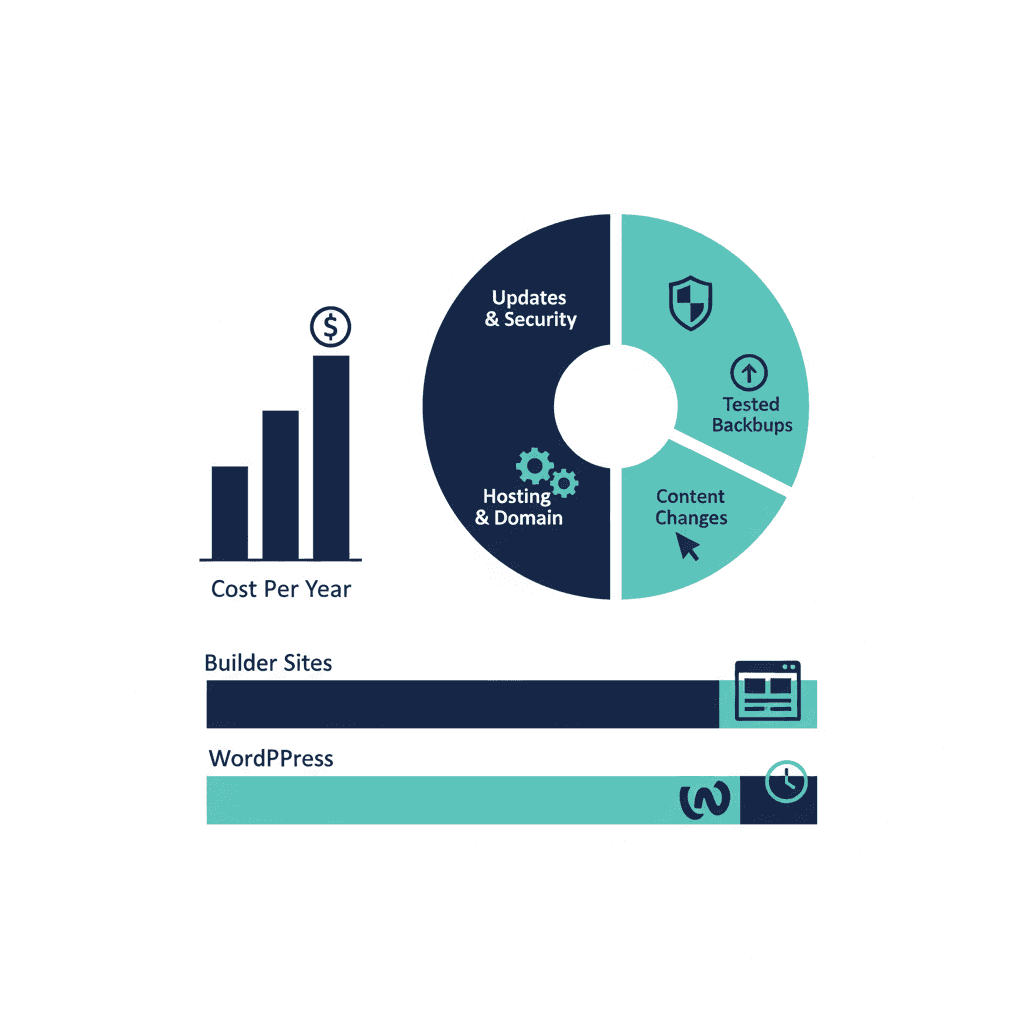
Standard business sites run $14 to $39 per month, which includes hosting and the CMS — there's no separate hosting bill to manage, and no plugin ecosystem to keep patched and updated. This is meaningfully simpler than WordPress's total cost of ownership, though the platform itself has more of a learning curve than Squarespace. Budget separately for the design/build work itself if you're hiring someone — Webflow's own subscription cost is the smaller part of the total investment for most businesses.
The most common mistake
Underestimating the learning curve and expecting Squarespace-level simplicity. Webflow's power comes from more granular control, which means more decisions to make and more concepts to learn — a designer familiar with the tool will move faster than someone learning it from scratch for a one-off project. Budget for that learning time, or for hiring someone who already has it.
The honest recommendation
Choose Webflow if design quality and SEO control matter more to you than DIY simplicity, and you're willing to either learn the platform properly or hire someone who already knows it. It's the middle path between Squarespace's ease and WordPress's flexibility — genuinely the right choice for businesses whose needs sit in that middle.
Frequently asked questions
How much does Webflow cost?
Standard business sites typically run $14 to $39 per month, covering hosting and the CMS — no separate hosting bill or plugin costs to manage on top.
Do I need a designer to use Webflow?
You'll get meaningfully better results with one, or by investing time learning the platform yourself — Webflow's visual builder is more capable than Squarespace's but has a real learning curve to use well.
Is Webflow better than WordPress or Squarespace?
Not universally — see the full comparison in [WordPress vs Webflow vs Squarespace in 2026](/blog/wordpress-vs-webflow-vs-squarespace-2026). Webflow's niche is professional design quality with genuine SEO control, without WordPress's maintenance overhead.
Yash
Founder & Principal Consultant, Ynexgen
Yash leads Ynexgen, helping small and mid-sized businesses turn technology into a stronger foundation for growth — 7+ years across Salesforce CRM, websites, and AI adoption.