SEO content strategy means writing pages that answer the exact questions your buyers type into Google — one page per question — and connecting them so search engines understand you're an authority on the topic. That's the whole idea. Everything else (keywords, meta tags, backlinks) supports those two moves. Here's the plain-English version for a business owner deciding where to spend effort.
The core idea: match pages to searches
Google ranks pages, not websites. A page called "Services" ranks for nothing, because nobody searches "services." A page called "How much does a kitchen renovation cost in Pune?" can rank, because thousands of people type almost exactly that. An SEO content strategy is just the discipline of:
- Listing the questions your customers actually ask — about cost, timelines, comparisons, problems ("why is my…", "how do I choose…").
- Writing one genuinely useful page per question, with the direct answer at the top and specifics (real numbers, real steps) below it.
- Interlinking related pages so readers — and Google — can follow the topic deeper.
Why cost and comparison content works hardest
People closest to buying search for prices ("chatbot cost", "website redesign cost") and comparisons ("Zoho vs Salesforce"). Most businesses refuse to publish prices, so the few that answer honestly collect that high-intent traffic. If you write only ten pages, make eight of them cost and comparison answers.
What a topic cluster looks like
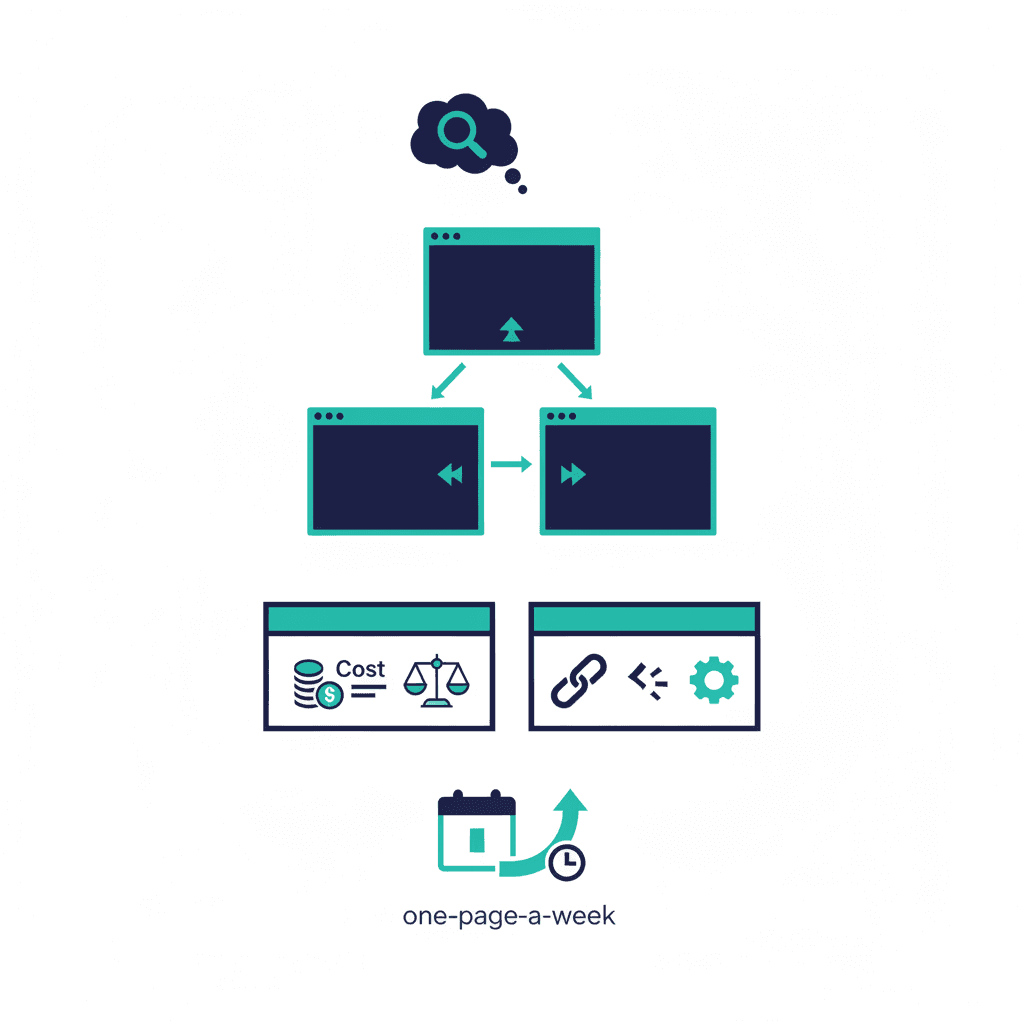
A pillar page covers the broad question (how much does a website cost); cluster pages cover every specific version of it (per industry, per platform, maintenance, redesign); and every page links its siblings. The cluster tells Google "this site covers the whole territory" — which is how small sites outrank big generic ones for specific queries.
The two things content can't do alone
- It can't rank without authority. New sites sit in Google's probation for months regardless of quality; links from real websites (directories, communities, press) are what shorten it.
- It can't convert without a working site. Ranking for a question and then losing the visitor is a different failure — diagnose that separately.
A realistic cadence for a small business
One good page a week beats thirty thin pages in a burst. "Good" means: the answer in the first sentence, real numbers, an FAQ section, links to your related pages, and one clear next step for the reader. Measure in Search Console monthly: impressions first (Google testing you), positions next, clicks last — in that order, over months. How Google finds the new pages in the first place is its own small topic: how search engines discover new content.
Want your first twenty questions mapped to your actual market? Book a free consultation — content-led SEO is exactly how the site you're reading gets found.
Frequently asked questions
What is an SEO content strategy?
The discipline of listing the questions your buyers actually type into Google, writing one genuinely useful page per question with the direct answer up front, and interlinking related pages into clusters so search engines recognize topical authority. Keywords, meta tags and links all support those core moves.
What content ranks fastest for a small business?
Specific, low-competition questions — especially cost and comparison queries ('how much does X cost', 'X vs Y') — because buyers closest to purchasing search them and most businesses refuse to publish honest answers. Broad head terms come months later, after the site earns authority.
How often should a small business publish SEO content?
One good page a week is a strong, sustainable cadence — the answer in the first sentence, real numbers, an FAQ, and links to related pages. Consistency over months beats bursts; measure impressions first, then positions, then clicks in Search Console.
Why isn't my SEO content getting traffic?
Usually one of three: the site is too new (Google's trust takes months regardless of quality), the pages target phrases nobody searches, or the domain has no backlinks giving Google a reason to rank it over incumbents. Check Search Console — impressions without clicks means you're being tested; zero impressions means a targeting or authority problem.
Yash
Founder & Principal Consultant, Ynexgen
Yash leads Ynexgen, helping small and mid-sized businesses turn technology into a stronger foundation for growth — 7+ years across Salesforce CRM, websites, and AI adoption.